

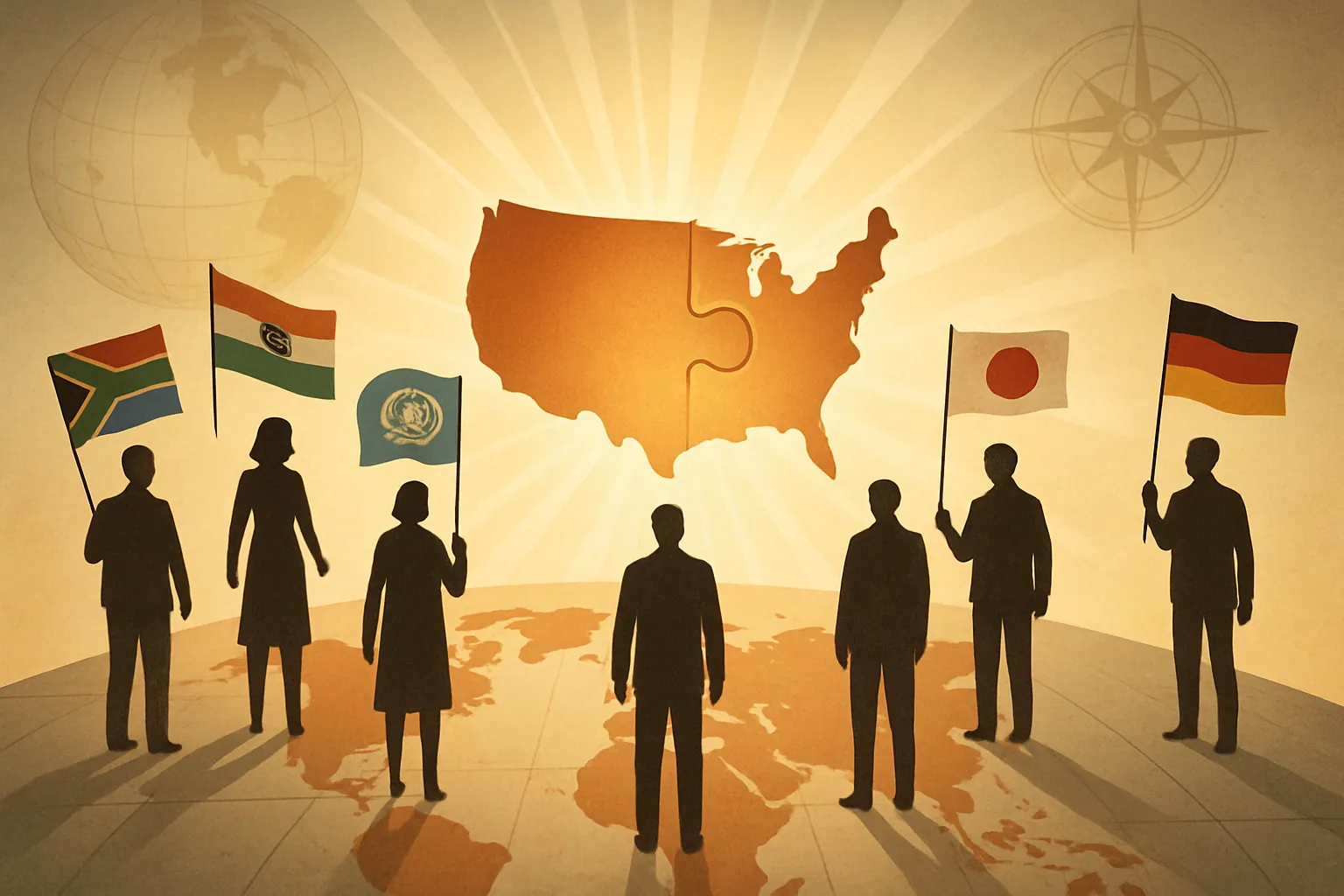
U.S. Prepares to Welcome First Afrikaner Refugees
The Trump administration is set to welcome its first group of Afrikaner refugees from South Africa, with over 50 arrivals expected at Washington Dulles International Airport early next week. This move, part of President Trump’s controversial policy initiated in February, grants refugee status specifically to white Afrikaners who argue they face discrimination in their native country. Classified under the P1 refugee category, these individuals have been deemed to require resettlement based on their particular circumstances and alleged persecution.
Contrary to the broader trend in U.S. refugee policies, which have seen dramatic reductions in admissions from various countries, the administration has prioritized Afrikaners. Administration officials and media reports confirm that the arriving refugees will be greeted during an unusual high-profile event attended by senior U.S. State Department officials. After the initial arrival in Virginia, these refugees are scheduled to disperse to several states, including Alabama, California, Montana, and New York, based on existing family connections or resettlement availability.
“The administration views this as a necessary humanitarian response to what it sees as an increasingly hostile environment for Afrikaners in South Africa,” an official from the State Department reportedly stated.
The decision is part of a broader immigration strategy that has drawn significant criticism for its perceived inconsistency. While the U.S. is actively deporting some refugee groups, it simultaneously facilitates rapid immigration and resettlement for others, such as the Afrikaners. This contrasting treatment has led observers to question the equity and motives of U.S. immigration policy under President Trump.
South Africa Challenges Claims Amid Increasing Controversy
President Trump’s claims that white Afrikaners are systematically persecuted by the South African government have been strongly rebuked by South African officials. The controversy centers around proposals for land reform that could potentially expropriate farmland without compensation—a measure intended to correct the legacy of land ownership disparities created by apartheid and colonialism. However, South Africa maintains that such actions would occur only under strict conditions and denies allegations of racial targeting.
In response to U.S. refugee admissions of Afrikaners, the South African government is actively engaging with American counterparts to prevent misuse of the resettlement program. Pretoria’s primary concern is ensuring that the program does not become a conduit for individuals attempting to evade justice in South Africa.
“We have clearly indicated to our American colleagues that this arrangement must not be exploited by fugitives,” emphasized a South African official in Pretoria.
The controversy surrounding American intervention has also amplified domestic debates within South Africa regarding race, land reform, and international perceptions of post-apartheid society. Critics of Trump’s policy argue that the selective acceptance of Afrikaners not only misrepresents the situation but risks undermining diplomatic relations and stirring broader racial tensions.
Historical Context and Diplomatic Implications
The current debate recalls South Africa’s long and tumultuous history of racial discrimination, culminating in the apartheid system that legally enforced racial segregation and disadvantaged the Black majority up until the early 1990s. After apartheid’s end, the nation embarked on extensive efforts toward reconciliation and equity, including the redistribution of agricultural and economic resources historically held disproportionately by whites.
However, the proposed land expropriation without compensation—a central point in Trump’s criticism—remains sensitive and politically charged domestically. This policy seeks to address lingering inequalities resulting from apartheid-era policies. Despite this intent, the discourse surrounding land reform has become polarized internationally, particularly among conservative commentators and political figures abroad.
“Land reform is essential to redress historical injustices, but must be handled responsibly to maintain stability and economic confidence,” said economist Dr. Jonathan Moyo, expressing concern over international misrepresentations.
The implications of Trump’s policy extend beyond immediate diplomatic tensions. By selectively granting refugee status to Afrikaners while restricting other groups, critics allege that the administration reinforces problematic racial narratives and undermines the fundamental humanitarian principles guiding refugee assistance globally.
The decision to prioritize Afrikaner resettlement, thus, raises enduring questions about U.S. asylum policies and their alignment with international norms and expectations. Moreover, as up to 1,000 Afrikaners are potentially set for resettlement this year alone, the diplomatic strain with South Africa and broader international scrutiny are likely to intensify, prompting further debates over global refugee politics and racial equity.