

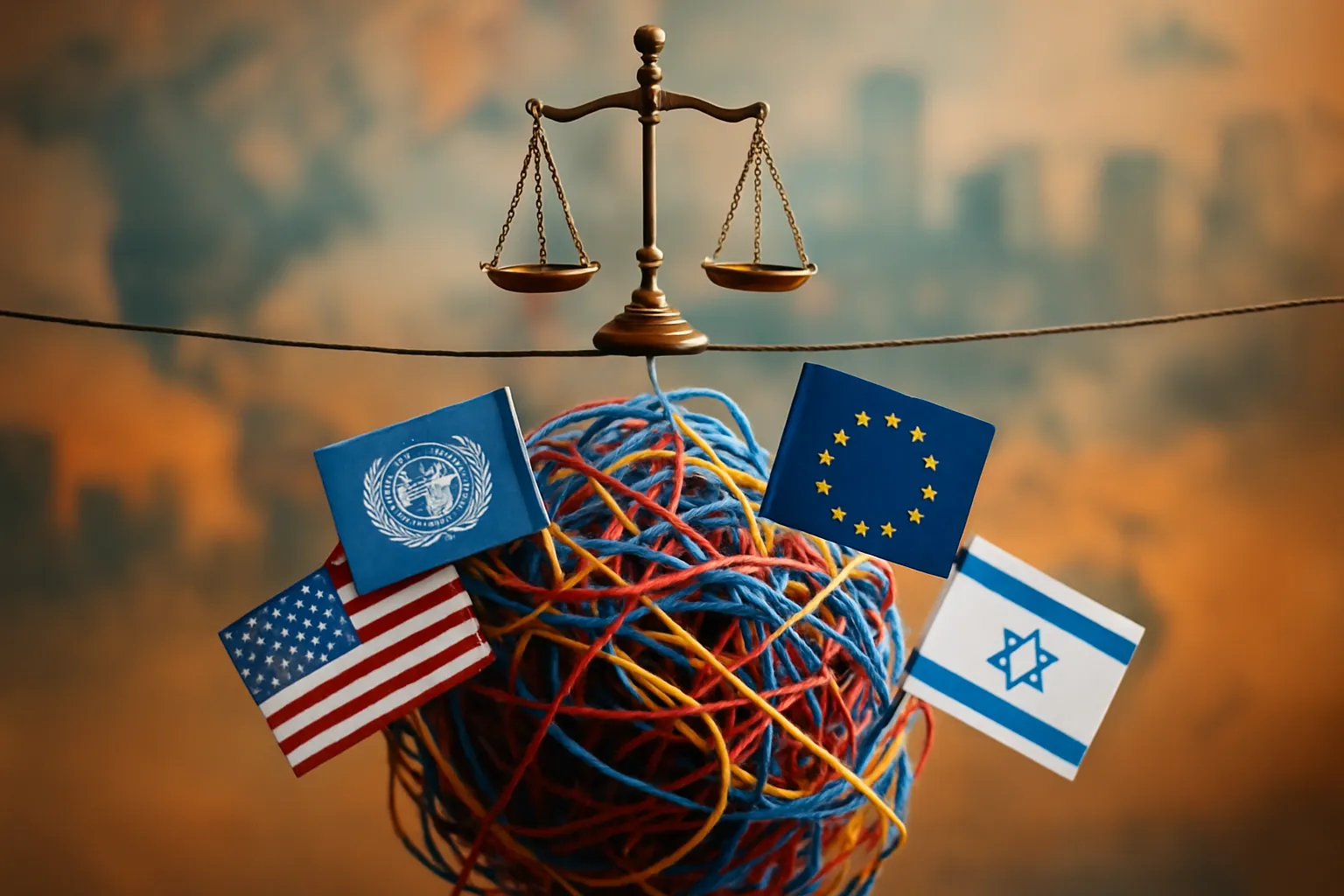
UN Expert Criticizes European Countries Over Netanyahu’s Safe Passage
Francesca Albanese, the UN Special Rapporteur on the human rights situation in the Occupied Palestinian Territories, has criticized Italy, France, and Greece for allowing Israeli Prime Minister Benjamin Netanyahu to fly through their airspace. Netanyahu, who traveled to the United States for diplomatic talks, currently faces an arrest warrant from the International Criminal Court (ICC) for alleged crimes against humanity during military operations in Gaza. Albanese highlighted that these three countries, as members of the Rome Statute which established the ICC, had a legal obligation to execute the warrant upon Netanyahu’s entry into their airspace.
Albanese argued the countries “must explain why they provided safe passage” despite their clear international commitments. The United States itself is not a party to the ICC and thus not obliged to enforce its arrest warrants, complicating attempts at international legal accountability. Netanyahu’s U.S. visit, focusing in part on discussions about Gaza and peace negotiations, has intensified the controversy surrounding the obligations of European countries toward ICC mandates.
“These countries are theoretically obligated to arrest Netanyahu, and their failure to enforce an ICC warrant undermines international law and human rights norms,” remarked Albanese.
So far, Italy, France, and Greece have not provided formal public responses to Albanese’s inquiries. The situation underscores the complexities nations face when balancing diplomatic relationships with commitments under international law, especially regarding high-profile figures like Netanyahu.
United States Imposes Sanctions on Francesca Albanese
Amidst these developments, the United States has implemented significant sanctions against Francesca Albanese herself, citing her recent criticism of Israel’s activities in Gaza and broader international corporate complicity. The sanctions, including travel bans and asset freezes, were announced by U.S. Secretary of State Marco Rubio and highlight growing tensions between the U.S. and UN mandate holders critical of Israeli policies.
Albanese had previously reported that over 60 U.S. and multinational companies were complicit in aiding Israeli settlements and military actions. Her findings advocated for accountability mechanisms and recommended that businesses reassess their activities in conflict areas, particularly those linked to human rights abuses. The U.S. administration labeled these efforts as politically biased, accusing Albanese of attempting to influence ICC proceedings unfairly against U.S. and Israeli officials and corporations.
“We view these sanctions as necessary to combat politically motivated attempts to misuse international law,” said Rubio in his announcement.
The UN Secretary-General António Guterres and Jürg Lauber, president of the UN Human Rights Council, have both criticized the sanctions imposed on Albanese. They stated that such punitive actions threaten to undermine the independence of the UN and set a worrying precedent for the future integrity of international human rights mechanisms.
Historical Context and Broader Implications
The current incidents involving Netanyahu’s safe passage and the U.S. sanctions on Albanese are part of a broader context of tense U.S.-UN relations, especially concerning international legal proceedings and criticism of allies such as Israel. Historically, the United States has maintained a cautious and often adversarial stance towards the International Criminal Court. Under former President Donald Trump, the U.S. considerably reduced cooperation with various UN bodies, including a withdrawal from the UN Human Rights Council and cessation of funding to the Palestinian relief agency, UNRWA.
The tension reflects ongoing geopolitical friction between international accountability mechanisms and national political interests. Israel’s treatment of Palestinians has long been scrutinized by international observers, human rights organizations, and UN experts. Albanese’s allegations of “genocide” in Gaza have been vehemently denied by Israel and criticized by U.S. officials as inflammatory and inaccurate.
“We must not allow fear of sanctions or political pressure to silence the urgent calls for justice. The suffering in Gaza demands international attention and accountability,” Albanese commented in response to sanctions.
Albanese’s stance highlights deeper issues regarding the global community’s effectiveness in enforcing international justice. Already, Palestinian human rights advocates have warned that such sanctions could dissuade experts from open and independent reporting, potentially leading to decreased accountability in conflict zones.
The developments involving Netanyahu, Albanese, and the implicated European states may have lasting impacts on international diplomatic interactions, particularly between ICC signatories and powerful non-member states like the U.S. Critics argue that if countries selectively enforce international law based on political alliances, the credibility and efficacy of global justice institutions may be dramatically undermined. This latest episode places a spotlight on tensions between sovereignty, diplomatic strategy, and the international community’s commitment to human rights accountability.