

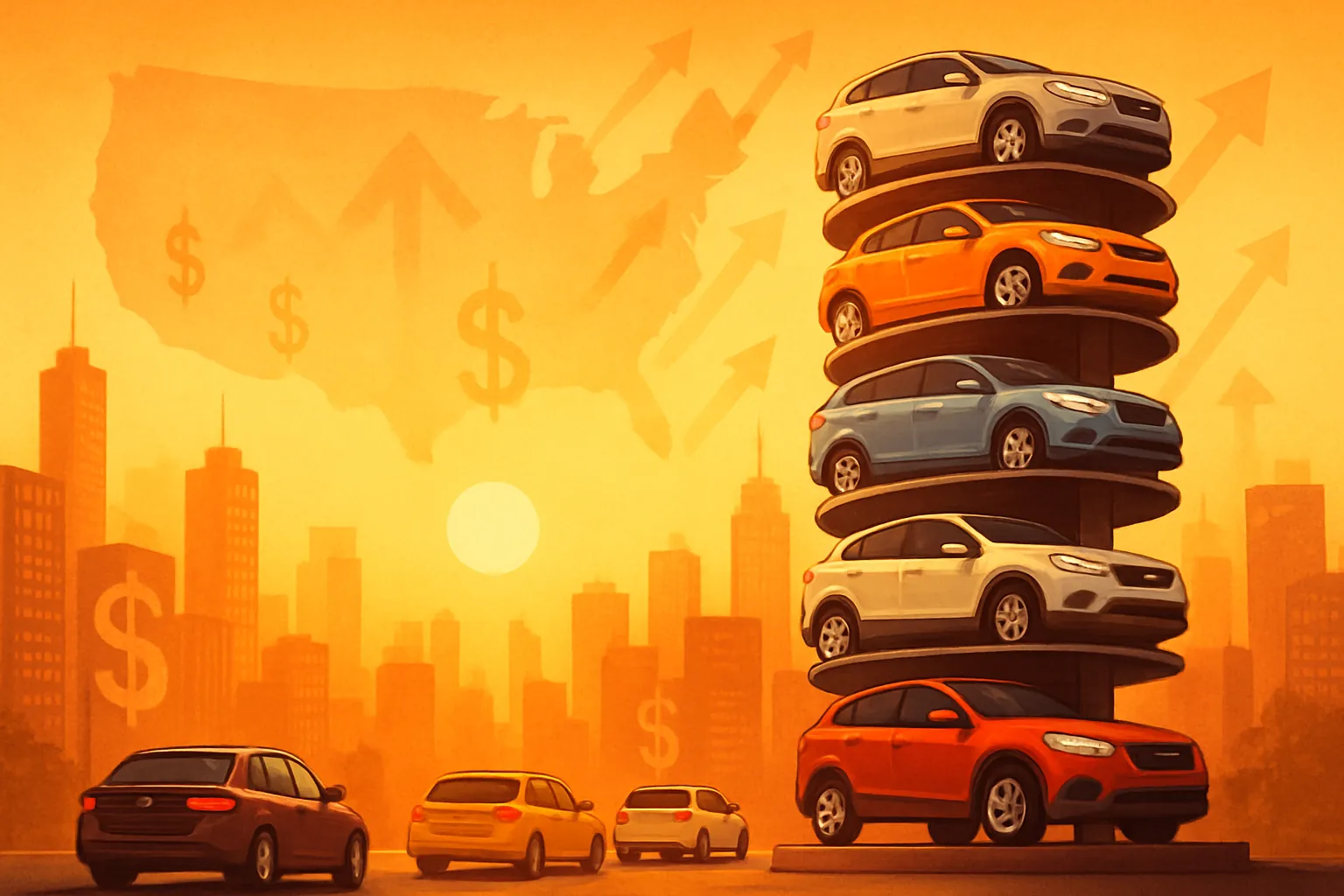
U.S. Car Price Surge Driven by Tariffs
U.S. new-vehicle prices experienced a significant increase of 2.5% in April 2025, marking the largest jump in over a decade, excluding the pandemic’s onset period in April 2020. The average new vehicle transaction price has now reached $48,699, reflecting increased costs attributed largely to the 25% tariffs imposed by President Donald Trump on imported automobiles from Mexico, Canada, and other nations. Typically, from March to April, vehicle prices rise approximately 1.1%, underscoring the unusual nature of this increase.
While the tariffs were anticipated to exert upward pressure on vehicle prices, automakers have initially hesitated to pass these additional expenses onto consumers through higher sticker prices. Instead, automakers like Ford have selectively increased pricing on certain high-demand models, particularly those manufactured in Mexico, by up to $2,000.
Despite the general rise in vehicle prices, the largest segment within the U.S. automotive market—compact crossover SUVs—defied the trend by experiencing an average transaction price decline of 0.2% year-over-year. Leading mainstream automakers such as Ford, Chrysler, Dodge, Ram, Hyundai, and Volkswagen similarly observed modest price reductions in April 2025, highlighting a mixed impact of tariffs across different vehicle categories.
“While overall prices have risen significantly, specific segments and brands managed to avoid passing these increased tariffs directly onto consumers, attempting instead to maintain market competitiveness,” said a spokesperson from Cox Automotive.
Electric vehicles (EVs) notably increased by 3.7% year-over-year, climbing to an average price of $59,255, although sales volumes dropped by 6% compared to March. This rise underscores an ongoing challenge for an electric car market already confronting higher baseline costs and now, additionally, tariff-induced inflation.
Market Dynamics and Consumer Response
The recent tariffs have not only increased the prices consumers pay for new vehicles but also have indirectly impacted costs associated with auto parts. Repair shops across the country are reporting higher prices for essential automotive parts, a direct consequence of tariff-driven import duties. Stores such as Izzy’s Auto have had no choice but to pass these costs onto consumers.
These cost burdens, shared between new car buyers, vehicle repair services, and used car dealers, have amplified broader inflationary pressures throughout the automotive industry. Indeed, wholesale used-vehicle prices also rose notably, with the Manheim Used Vehicle Value Index increasing 4.9% year-over-year in April to a level of 208.2.
In reaction to escalating prices, consumer behavior has shifted noticeably. Anticipating further price hikes, buyers surged to dealerships in April, boosting demand and mitigating some risks from accumulating inventory. Yet, with decreased promotional discounts and sales incentives plunging to lows not observed since the summer of 2024, consumer flexibility appears increasingly limited.
“Consumers are definitely feeling these impacts. They’re rushing to buy now, expecting further price increases in the future,” explained Eric Randolph, proprietor of Izzy’s Auto, reflecting concerns echoed widely within the automotive retail community.
While automakers initially refrained from raising sticker prices across the board, ongoing consumer demand and limited stock availability could inevitably prompt broader price adjustments in the coming months. The sustained increase in wholesale costs further signals that vehicle affordability could face persistent challenges ahead without considerable market stabilization.
Broader Implications and Historical Context
This rise in vehicle costs comes within a broader trend wherein tariffs have historically been employed by administrations as strategic trade tools meant to incentivize domestic production and protect local industries. The Trump administration had previously applied similar tariffs on imported steel and aluminum in 2018, leading to cost increases in vehicles and other manufactured goods at that time.
Historically, while protectionist tariffs intend to bolster domestic production, economists generally agree their immediate impact often includes higher costs for consumers and increased inflationary pressures. The automotive sector, globally interconnected and reliant on international supply chains, tends to be especially sensitive to such tariff measures. This sensitivity is evidenced in the current scenario, as tariffs from strategic trade partners like Mexico and Canada have quickly permeated through vehicle prices and market dynamics.
As tariffs drive costs upward, the automotive industry faces challenging decisions to balance profitability and market share preservation. While promotions and selective price reductions have been implemented by certain manufacturers to maintain competitiveness, the broader market could see continued price volatility as tariff implications deepen.
“Historical evidence has consistently shown tariffs result in complex trade-offs, offering potential domestic economic benefits at the risk of elevated consumer prices and economic inefficiencies,” noted Dr. Maria Lopez, an economist specializing in international trade at Stanford University.
Looking forward, the broader implications of sustained tariffs could reshape consumer behavior significantly, possibly accelerating shifts toward used vehicles or alternative transportation options, including increased interest in public transport and ride-sharing solutions. Additionally, prolonged tariff impacts may spur automakers to reevaluate global supply chains, potentially boosting domestic manufacturing—which aligns with the strategic economic goal behind tariff implementation.
Ultimately, as the automotive industry navigates these tariff impacts, industry stakeholders—from manufacturers and dealers to consumers—will continue adapting in the face of ongoing economic uncertainty. The extent to which these tariffs will permanently alter the market remains an open question, contingent on future trade policy developments and market responses.