

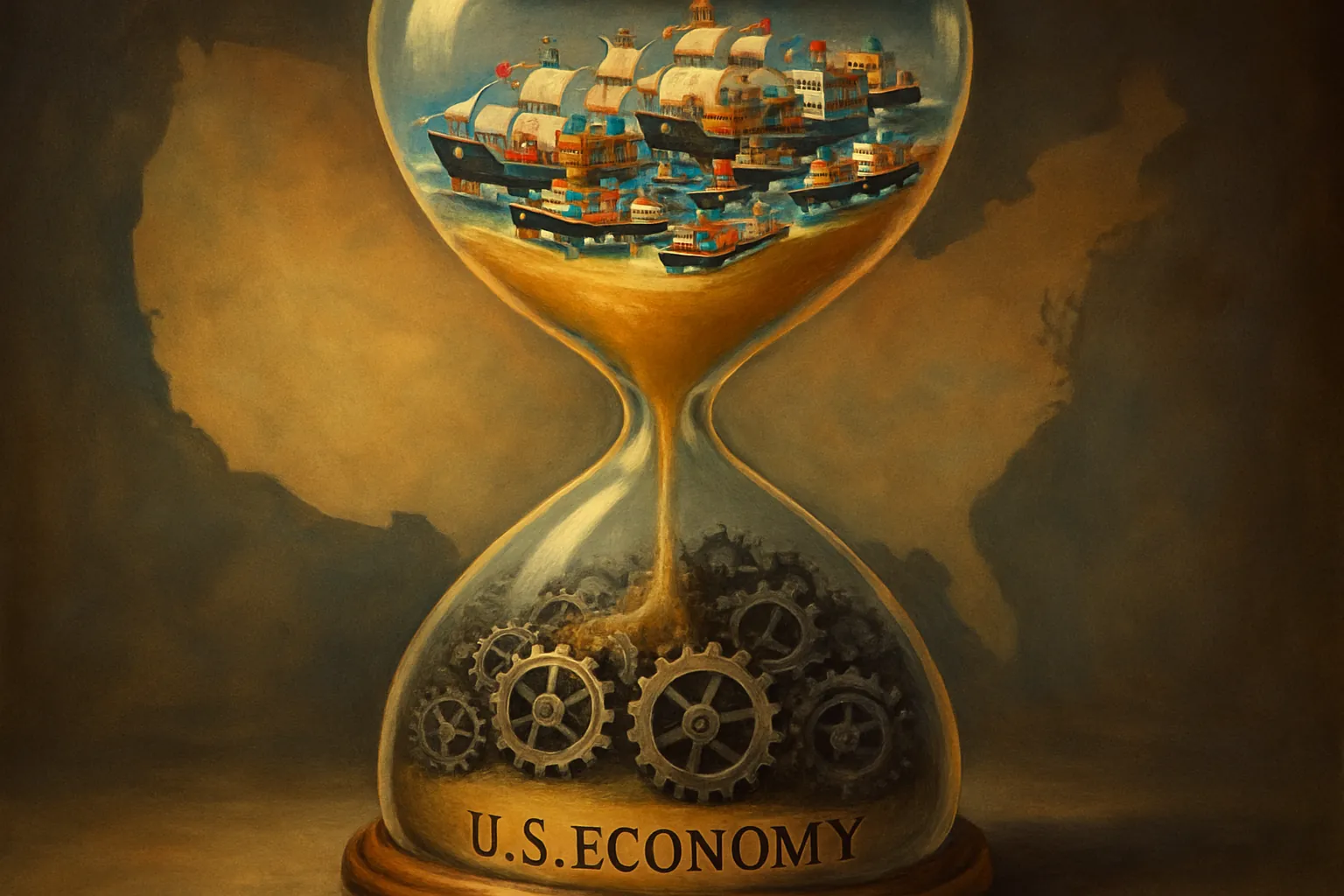
U.S. Economy Experiences First Quarterly Decline in Three Years
The U.S. economy contracted at an annualized rate of 0.5% in the first quarter of 2025, marking the first quarterly decline in three years. This contraction sharply contrasts with the 2.4% growth seen in the last three months of 2024. Data released by the U.S. Commerce Department reveals the decline was steeper than initial estimates. Consumer spending, traditionally a driving force in the economy, notably weakened, with sharp reductions in discretionary spending on dining, recreation, and durable goods such as automobiles.
Imports surged dramatically, increasing 37.9% over the previous quarter. This spike was largely attributed to businesses accelerating their purchases in anticipation of new tariffs imposed by President Donald Trump’s administration. Economists noted that the sudden influx of imports negatively impacted GDP by nearly 4.7 percentage points, highlighting the significant role trade tensions play in the current economic landscape.
“The surge in imports earlier this year has complicated GDP measurements,” said Federal Reserve Chair Jerome Powell. “Businesses stockpiling ahead of tariffs have obscured underlying economic trends, making analysis particularly challenging.”
While the economy overall faced contraction, a separate measure known as “real final sales to private domestic purchasers,” which assesses underlying economic strength, increased at a 1.9% annual rate during the same period, albeit down from 2.9% previously. This indicates that while headline GDP figures show contraction, elements of domestic demand remain resilient.
Consumer Spending Decline and Inflation Trends
In May, consumer spending dipped notably, marking its first decline since January. Spending on goods fell 0.8%, significantly driven by a 1.8% drop in durable goods, particularly vehicles. Conversely, expenditures on services saw marginal improvement, posting a slight 0.1% increase largely constrained by reduced hotel and motel accommodations. This shift signals heightened consumer caution amidst ongoing economic uncertainties.
Wage growth remained solid, even as personal incomes experienced a 0.4% decline, primarily due to fluctuations in federal payments like Social Security and agricultural aid. Despite these income changes, inflation pressures stayed relatively muted. The Federal Reserve’s preferred inflation indicator—the Personal Consumption Expenditures (PCE) price index excluding food and energy—inched up slightly by 0.2%, reflecting limited price pressures and moderate inflationary expectations.
“We are closely monitoring inflation trends, particularly as tariffs begin to influence prices,” Chairman Powell remarked. “However, the current data suggests inflation remains stable within our target range, allowing us some flexibility in our policy decisions.”
These mixed indicators present challenges for policymakers, as the Federal Reserve continues to navigate between supporting economic growth and maintaining inflation control. Federal Reserve Chair Jerome Powell has indicated the central bank will assess the impact of tariffs over the coming quarters before making further decisions on interest rate adjustments.
Broader Implications and Global Context of Tariff-Induced Economic Slowdown
The current economic downturn underscores the complex ramifications of international trade policies. President Trump’s tariffs, primarily targeting imports, have prompted businesses and consumers to adjust purchasing behaviors significantly. The practice of stockpiling goods ahead of tariffs—often referred to as front-loading—has resulted in notable volatility in trade data and spending patterns. Analysts anticipate this behavior will lead to subsequent pullbacks in spending, complicating economic forecasts and raising concerns about prolonged economic impacts.
Moreover, global trade relationships are experiencing heightened tensions, notably between the U.S., European Union, and China, fueling uncertainty and market instability. Other countries affected by these tariffs are actively seeking alternative trade partnerships, further reshaping international trade dynamics and affecting global economic stability. This evolving scenario reflects broader tensions in international commerce, as nations adjust their policies and strategies in response to protectionist measures.
Historically, such protectionist policies and tariff wars have frequently led to broader economic consequences. For instance, the Smoot-Hawley Tariff Act of 1930 notably exacerbated the Great Depression by drastically reducing international trade and increasing global economic isolation. Current policymakers and economists emphasize the importance of considering historical precedents when assessing the risks of persistently high tariffs and continued trade disruptions.
“Trade wars historically tend to escalate, creating uncertainty and instability that can harm global economic growth,” explained Dr. Paul Edwards, an economist specializing in international trade at the Brookings Institution. “Policymakers must carefully weigh immediate protective benefits against the long-term risks that tariffs pose to domestic and international markets.”
Looking forward, many economists predict a rebound in second-quarter growth, expecting GDP to recover to approximately 3%. However, persistent trade uncertainties could undermine consumer confidence further, dampening future spending. Analysts recommend that businesses and consumers remain vigilant, preparing for potential ongoing disruptions as the full impact of trade policies continues to unfold.