

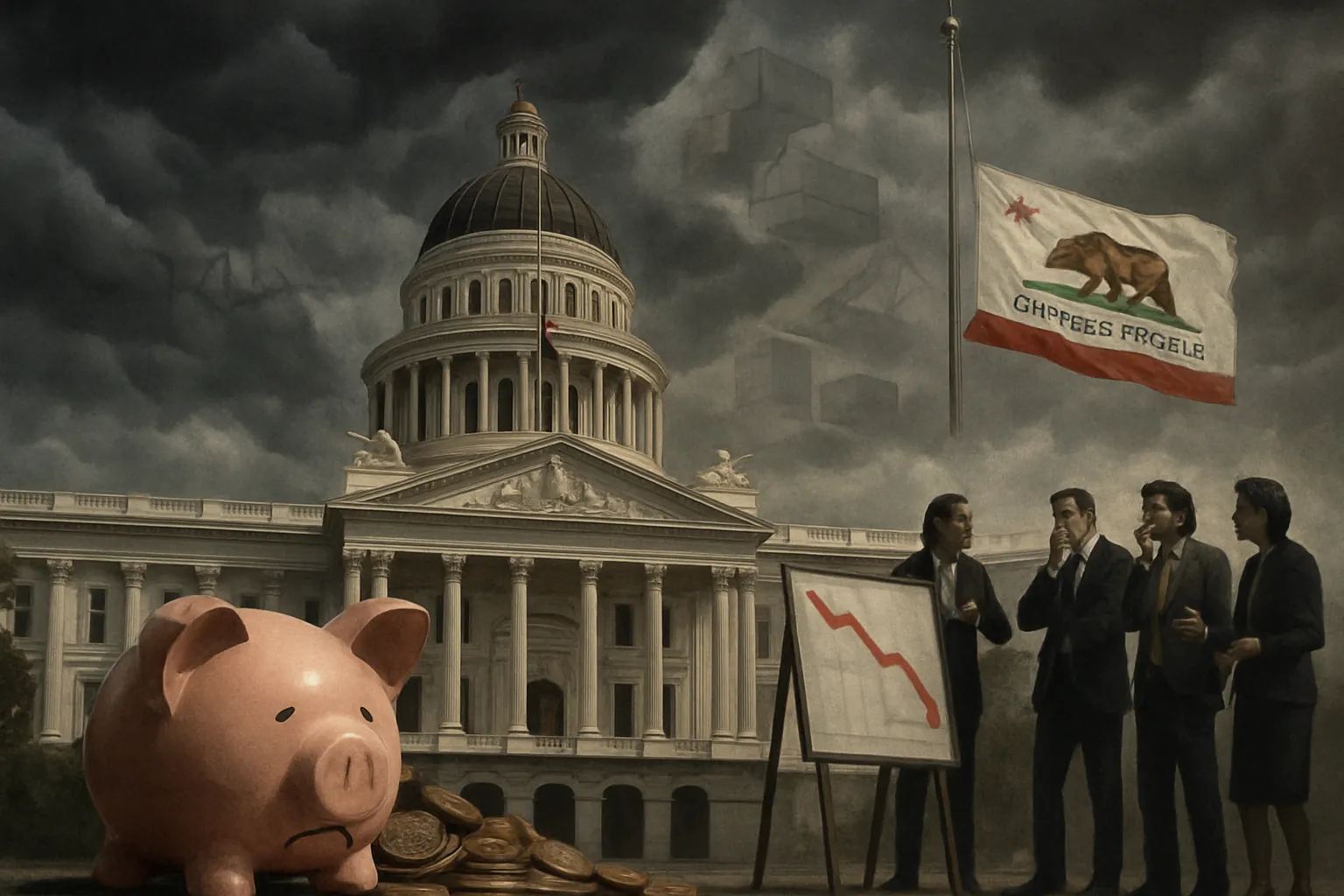
Projected Revenue Losses Amid Tariff Impact
The state of California anticipates a substantial $16 billion decrease in tax revenue for fiscal year 2025-2026, which state officials attribute to the economic repercussions of President Donald Trump’s tariff policies. According to Governor Gavin Newsom’s finance department, these tariffs have significantly disrupted markets, reducing the state’s expected general fund revenue by approximately 4 percent from earlier projections. The revenue shortfall is predominantly driven by a decline of roughly $10 billion in capital gains tax revenue, $2.5 billion less in corporate tax collections, and a decrease of about $3.5 billion in personal income tax receipts, including those from wages and business income. An additional $1.5 billion loss stems from other personal income tax items.
Governor Newsom referred to this economic downturn as a “Trump Slump,” emphasizing the direct consequences of the tariffs on California’s economic stability. The governor has highlighted the negative impact on key sectors such as agriculture, manufacturing, tourism, and shipping, which heavily rely on international trade and have faced significant disruptions due to the tariffs, particularly with China, California’s largest trading partner.
“California is under assault… because we have a president who’s been reckless in terms of assaulting those growth engines,” Newsom stated, accusing Trump of “eroding the rule of law” and undermining democratic institutions.
This revenue downturn follows a challenging period where California had already implemented stringent financial measures to stabilize its budget, including cuts to state agencies, clawbacks from healthcare providers, elimination of affordable housing programs, and suspension of business tax credits. Despite these emergency measures, the unexpected escalation in tariff-related economic disruptions has significantly compounded budgetary concerns.
Budget Adjustments and Medi-Cal Controversies
Governor Newsom’s revised budget proposal, presented amidst these financial pressures, outlines $226.4 billion in general fund spending. This figure represents a decrease from the $233.2 billion spent in the previous fiscal year but remains notably higher than the $147.8 billion allocated during Newsom’s first year as governor in 2019-2020. As part of the adjustments, the administration plans to pause further expansion of California’s Medi-Cal program—a state-funded healthcare service for low-income individuals—to undocumented adults, after substantial recent cost overruns.
Since Medi-Cal’s expansion in January 2024, more than 1.6 million undocumented immigrants have enrolled, leading to a financial overrun of more than $6 billion. To mitigate future budgetary liabilities, Newsom’s administration intends to introduce a monthly premium of $100 for new adult enrollees, a measure expected to stabilize the program’s finances but criticized by immigration advocates and healthcare activists as unfairly targeting vulnerable populations.
“The decision to impose monthly premiums significantly undermines efforts to expand coverage and could deter critical participation,” commented healthcare industry expert Laura Gomez.
In addition, critical initiatives such as affordable housing programs and local homelessness support did not receive renewed funding in the revised budget, marking difficult trade-offs as state officials work to close the budget gap. These austerity-driven decisions have attracted criticism from both sides of the political aisle, with Republicans challenging the governor’s fiscal management and Democrats expressing concerns about cutting essential social services.
Broader Economic Context and Political Implications
The financial challenges facing California represent broader concerns about the interconnectedness between federal trade policy decisions and state-level economic stability. California’s economy, the largest in the United States and among the largest globally, is particularly susceptible to market fluctuations induced by federal policies due to its robust dependence on international trade and investment. Historically, trade disruptions—such as those experienced during previous tariff escalations under different administrations—have had profound and lasting effects on state economies.
The Trump administration’s tariffs, primarily targeted at China, represent an extension of a broader U.S.-China trade conflict that began under Trump’s presidency. Initially triggered by disputes over intellectual property rights and trade imbalances, this conflict has gradually expanded to impact broader economic relations, affecting a wide array of sectors within California, from technology and agriculture to manufacturing and consumer goods.
“To blame tariffs for the deficit is like blaming a heart attack on the cheeseburger you ate last week, instead of the ones you’ve been eating for the last seven years,” remarked a Republican strategist, underscoring arguments that structural budget issues predate recent tariff policies.
California lawmakers must finalize a balanced budget by June 15. The ongoing discussion around the state’s finances will likely be politically charged, reflecting broader national debates over immigration policy, healthcare funding, and fiscal responsibility. Decisions made during these budget negotiations will set critical precedents for future state policies and revenue management strategies.