

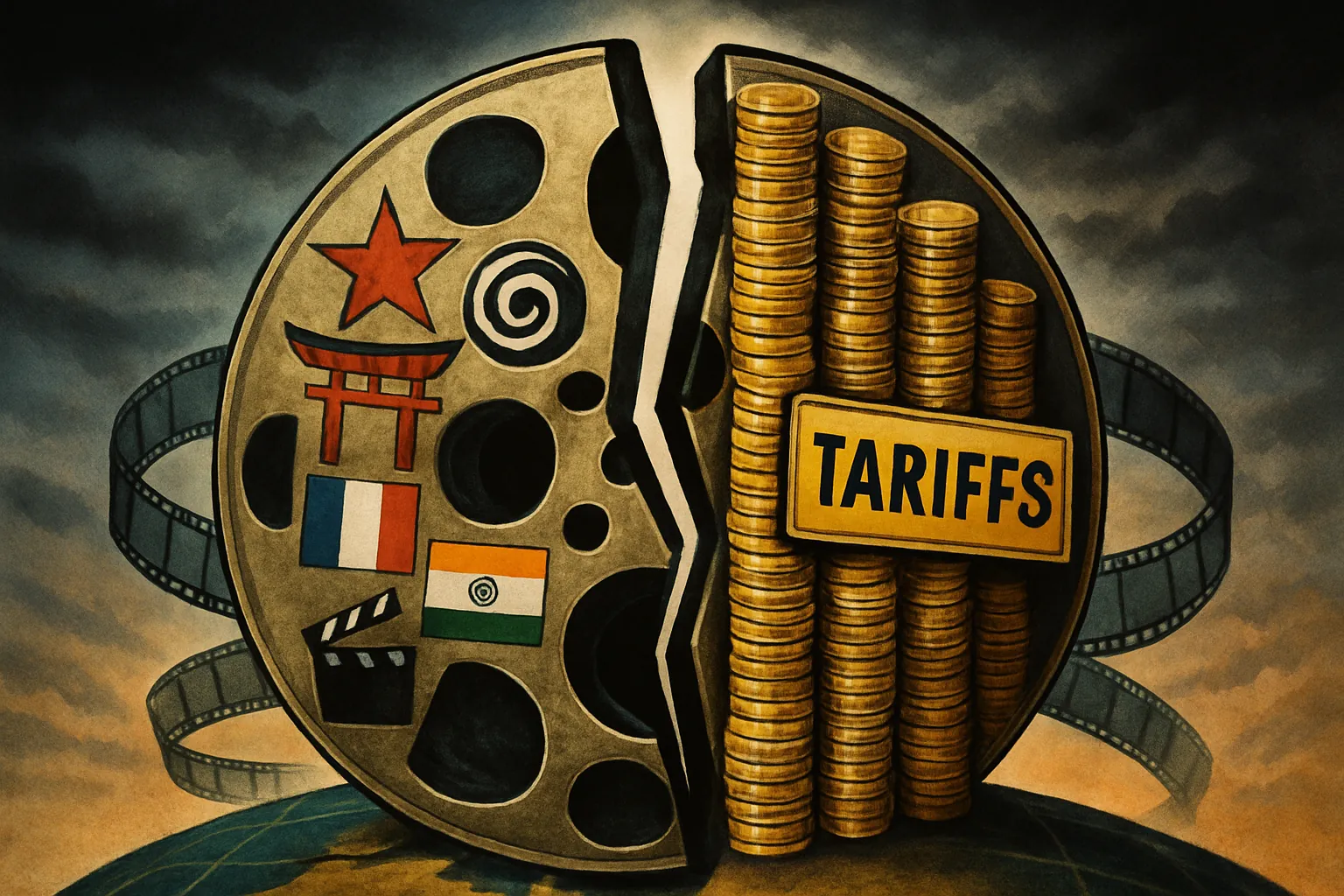
Global Film Industry Reacts to Trump’s Tariff Proposal
The global film industry is closely monitoring the proposal made by former U.S. President Donald Trump, who has suggested implementing a 100% tariff on movies produced outside the United States. Trump framed the proposal as a necessary measure to safeguard national security and support domestic film production. However, industry insiders and experts have expressed widespread concern over the potential repercussions such tariffs could have on international filmmaking and distribution.
Trump initially highlighted foreign film production incentives as problematic, describing them as a coordinated effort by other nations to influence American culture and economy. This stance has prompted many to question the implications of such a significant tariff. The administration is currently exploring various options to align with Trump’s vision of protecting economic security and boosting American film production.
“Although no final decisions on foreign film tariffs have been made, the Administration is exploring all options to deliver on President Trump’s directive to safeguard our country’s national and economic security while making Hollywood great again,” stated White House spokesman Kush Desai.
The ambiguity surrounding the application of these tariffs—whether they would pertain strictly to cinematic releases or include streaming platforms—remains a point of contention. Experts highlight that defining an “American film” may prove extraordinarily challenging given the international nature of modern filmmaking. Major Hollywood projects frequently utilize international locations for shooting, visual effects, sound mixing, and more, complicating potential enforcement.
Economic Impact on Key International Film Markets
Significant anxiety is being expressed in major international film production hubs like the United Kingdom, Canada, and Australia. The UK, which hosts extensive Hollywood investment on productions such as the “Mission: Impossible” franchise and “Star Wars” series, faces particular uncertainty. Around 99,000 people employed within the UK’s film sector could see their livelihoods endangered by such tariffs.
The British industry’s reliance on Hollywood’s investment is considerable. Currently, American studios enjoy substantial incentives, including a 25.5% tax credit on expenditures within the UK, an incentive critical to both UK employment and Hollywood production economics. As UK executives call for additional protective measures for their industry, many fear Trump’s proposal could render continued Hollywood investment economically unfeasible.
Similarly, in Australia, the proposed tariffs have sparked worry about significant job losses and disruption. Kevin Rudd, Australia’s ambassador to the US, has openly criticized the move, pointing out that the American film industry already struggles with significant challenges, such as stiff international competition and waning profits.
“This decision could send shockwaves globally, potentially causing significant disruption to the industry,” warned Screen Producers Australia.
Canada, particularly British Columbia, echoes these worries. Local film industry professionals report job insecurity, forced career changes, and overall uncertainty. With Hollywood’s heavy reliance on Canadian locations for significant portions of filming, particularly in cities like Vancouver, the proposed tariffs could severely impact local employment.
Long-Term Effects and Industry Adaptations
Historically, tariffs imposed by major economies have sparked retaliatory measures, potentially leading to a broader trade conflict. Analysts and industry professionals caution that similar reactions may occur if the U.S. proceeds with Trump’s tariffs proposal. Countries adversely affected could retaliate with taxes on American-based digital content or tighter quotas on imported American films, further hurting a vulnerable Hollywood industry.
The recent history of Hollywood underpins the seriousness of these concerns. Already weakened by numerous disruptive events such as the Covid-19 pandemic, delayed project schedules, and labor strikes, the U.S. entertainment industry is still struggling to fully recover. Current projections for 2025 box office revenues hover around $9 billion, substantially lower compared to previous peak periods.
Film localization and dubbing industries could also face unintended consequences. A significant percentage of global releases undergo translation, subtitling, and localization before reaching U.S. and worldwide audiences. Tariffs could reduce the number of international films entering the American market, causing a cascading impact on localization service providers and reducing global cultural exchange.
Nevertheless, some industry veterans, particularly in Canada, express cautious optimism regarding the sector’s adaptability. Chris Ferguson, head of Vancouver-based Oddfellows Entertainment, underscored this resilience, suggesting the film community could pivot creatively to sustain itself through diversification and strategic shifts in production methods and geographic focus.
“The industry is adaptable; we’ll pivot towards new strategies to continue creating content despite challenges,” Ferguson commented.
Ultimately, the proposed 100% tariff on foreign-produced films presents profound challenges and uncertainties for the global film community. While the U.S. administration continues to deliberate, industry leaders worldwide remain watchful, preparing to navigate potential shifts in filmmaking dynamics, economics, and cross-border cultural exchanges.