

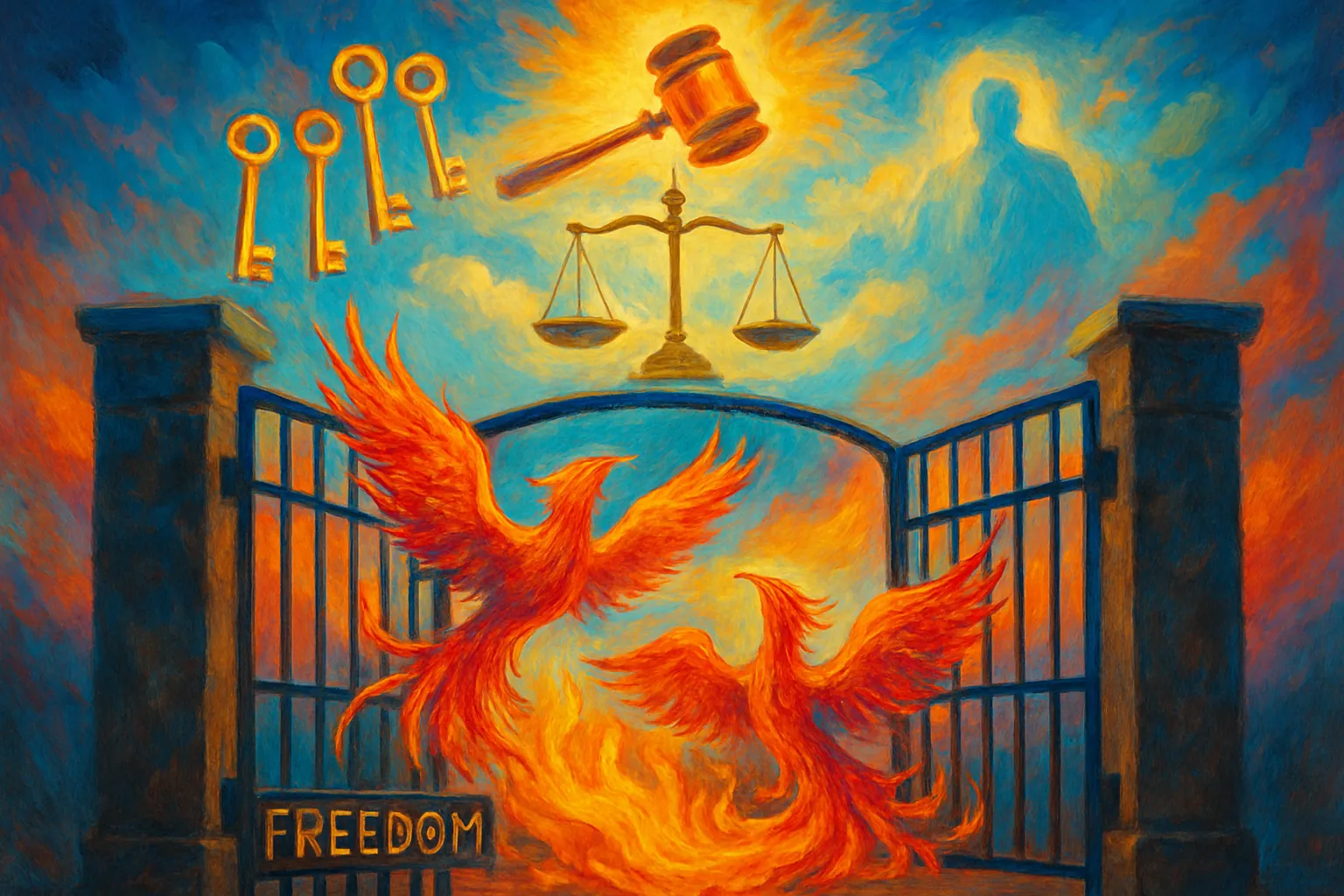
Trump Grants Full Pardon to Reality TV’s Todd and Julie Chrisley
In a significant legal reversal, former President Donald Trump has issued a full pardon to Todd and Julie Chrisley, stars of the reality television series “Chrisley Knows Best,” who had been convicted in 2022 on charges of bank fraud, tax evasion, and conspiracy. The couple originally faced a combined sentence of 19 years in prison and were ordered to pay restitution exceeding $17 million. Todd was serving a 12-year sentence, while Julie received a seven-year sentence, before their recent pardon.
The pardon not only secured their immediate release from prison but also canceled over $17 million in restitution. Julie Chrisley was being held at the Federal Medical Center (FMC) in Lexington, Kentucky, whereas Todd Chrisley was serving his time in a federal prison in Florida. Their release this week has sparked intense media attention and public discourse over the nature and timing of presidential pardons.
Trump personally contacted Savannah Chrisley, their daughter, informing her of the impending pardon. Savannah, known for her advocacy and support for Trump’s presidency, released an emotional video expressing profound gratitude and relief. In her public statement, she mentioned being overwhelmed with joy and thanked Trump’s administration for their support and decisive action.
“The president called me personally as I was walking into Sam’s Club and notified me that he was signing pardon paperwork for both my parents. We are eternally grateful,” Savannah said emotionally in a video posted on her Instagram account.
Legal Controversies and Public Reactions Surrounding the Pardon
Following the announcement, legal experts and commentators have voiced differing opinions on the implications of Trump’s decision. CNN legal analyst Elliot Williams publicly criticized the pardon, asserting that claims of unfair treatment towards the Chrisleys are unfounded given the evidence presented at trial and the jury’s unanimous decision. Despite these criticisms, the pardon has been overwhelmingly supported by Trump allies and conservative advocacy groups who argue that the Chrisleys were victims of a politically motivated prosecution.
The CPAC Foundation’s Nolan Center for Justice, where Savannah Chrisley serves as a senior fellow, has strongly advocated on behalf of the Chrisleys, citing allegations of prosecutorial misconduct and bias, reinforced by recent reports from the Office of Inspector General (OIG). They claimed improper access to the family’s financial records by investigators. CPAC celebrated the release, calling it a necessary correction of a “deep injustice.”
“This pardon corrects a deep injustice and restores two devoted parents to their family and community,” stated Alex Little, the Chrisleys’ attorney. “They were targeted due to their conservative values and high public profile.”
Todd and Julie had been convicted of defrauding community banks in Atlanta by obtaining more than $30 million in loans through falsified documents. Julie Chrisley faced additional charges of wire fraud and obstruction of justice. Although their sentences were slightly reduced in 2023, the pardon has effectively erased the legal consequences of their convictions.
Historical Context and Broader Implications of Presidential Pardons
The pardon of Todd and Julie Chrisley is part of a broader historical trend of presidents granting clemency or pardons to high-profile individuals and political allies. Historically, presidents from both parties have issued controversial pardons, often drawing criticism or praise based on partisan perspective. Some prominent examples include President Gerald Ford pardoning Richard Nixon, and Bill Clinton’s eleventh-hour pardon of financier Marc Rich.
Trump’s own presidency was marked by high-profile pardons, especially towards the end of his term, involving several political allies and prominent figures. These acts frequently reignited public debates about the ethics and political motivations inherent in the presidential pardon process. Critics argue that such pardons undermine trust in the judicial system, whereas supporters assert these powers are vital checks against prosecutorial misconduct or overly harsh sentences.
The ongoing debate surrounding these pardons extends into broader discussions about criminal justice reform and the powers of the executive branch. Savannah Chrisley has asserted that her family’s case underscores systemic issues in the judicial system, particularly concerning the treatment of individuals they say are targeted for political or ideological reasons. She vowed to use her platform to continue advocating against wrongful convictions and to seek broader criminal justice reforms.
The immediate practical impact of this high-profile pardon will also reverberate through media and entertainment. The Chrisley family reunion following the pardon is already being documented for a planned Lifetime docuseries. This rapid pivot highlights the intersection of celebrity, politics, and the legal system, and it will likely serve as a point of reference in discussions about executive clemency and judicial oversight for years to come.
Ultimately, the Chrisleys’ pardon underscores the complex interplay of power, politics, and popular culture, leaving broad implications for future debates on presidential authority and criminal justice.