

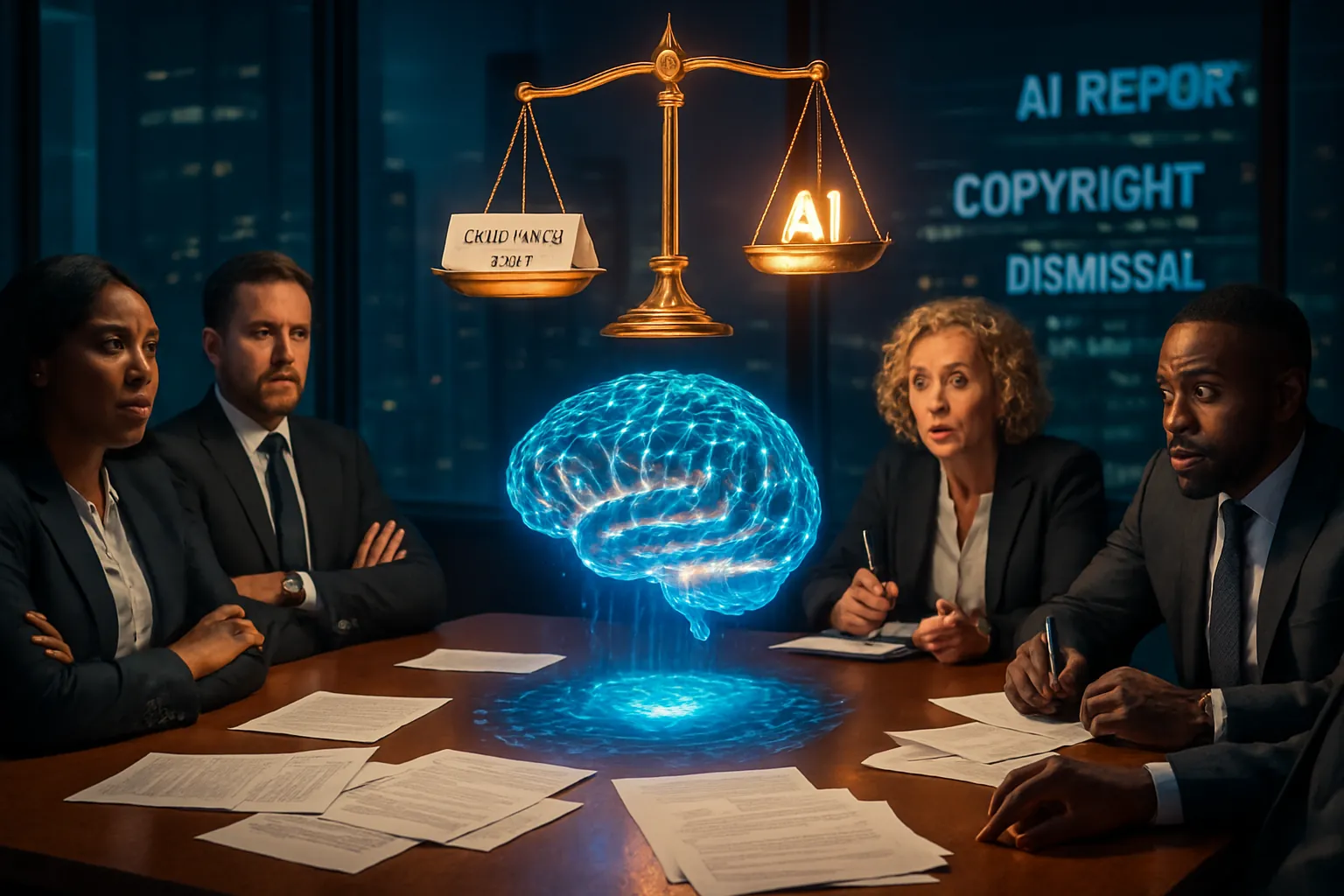
Unexpected dismissals spark concern around copyright and AI regulation
In a move that has stirred significant controversy, President Donald Trump dismissed Shira Perlmutter, Register of Copyrights, and Librarian of Congress Carla Hayden within days of each other. The firings come shortly after the Copyright Office issued a pivotal report raising serious legal and ethical questions about artificial intelligence (AI) technology. Perlmutter, appointed by Hayden in October 2020, had been responsible for overseeing the nation’s copyright policy, precisely at a critical juncture as AI rapidly evolves.
Both Perlmutter and Hayden’s positions typically require Senate confirmation and are structured to maintain independence from executive influence. Historically, the Register of Copyrights is appointed and supervised by the Librarian of Congress, whose appointment itself must be confirmed by the Senate. The abrupt dismissals deviate from this traditional oversight structure, raising concerns from lawmakers and political observers alike.
The White House, notably silent, has refrained from providing any official rationale for these unprecedented firings. This absence of explanation has reinforced concerns over potential executive overreach into independent regulatory bodies, particularly given Trump’s recent emphasis on expanding the nation’s AI capacities through substantial private sector investment.
“These actions raise troubling questions about executive interference with independent governmental oversight, which are essential to preserving confidence in our regulatory institutions,” commented Representative Joseph Morelle, expressing concerns echoed by several Democratic colleagues.
AI advancement initiative sparks further speculation
The timing of these firings reinforces suspicion surrounding the relationship between copyright policy enforcement and broader AI development goals. A few days before Perlmutter’s firing, her office publicly expressed concern regarding the legality of AI systems utilizing copyrighted material for model training. The Copyright Office report questioned cost-benefit analyses regarding copyright licensing, its associated fees, and the implication these might have on AI development and innovation potentials.
These developments come at a time when President Trump is strongly pushing to position the United States as a global leader in artificial intelligence technologies. Recently announced was an ambitious private sector initiative involving giants such as OpenAI, Softbank, and Oracle, pledging up to $500 billion towards national AI infrastructure. This initiative has been framed as essential for national competitiveness and technological leadership on the global stage.
Critics argue that removing figures like Perlmutter and Hayden could pave the way for a streamlined regulatory environment more conducive to rapid AI technology expansion at potentially reduced consideration for copyright law protections. Such a scenario could present significant policy shifts and potential legal confrontations in copyright law.
“Properly balancing innovation with fair copyright protection is essential,” argued copyright expert Brenda Lawrence. “This balance must be carefully and independently assessed, free of political expediency.”
Historical context and broader policy implications
Historically, the Copyright Office, established in 1897 under the Library of Congress, functions independently from executive interference, explicitly to prevent political influences from shaping copyright policy. The office manages a significant function in intellectual property rights enforcement nationwide, supporting a staff of approximately 450 in charge of registering copyright claims, recording ownership, and administering copyright law.
The positions occupied by Perlmutter and Hayden have historically served as key appointments respected for their neutrality and expertise. Their unexplained dismissals represent a dramatic departure from precedent, raising broader implications about executive power and its limits. Experts have highlighted that these actions could set concerning precedents, potentially encouraging future administrations to impose greater control over copyright and intellectual property institutions, directly affecting the independence of regulatory oversight mechanisms.
The controversy surrounding this incident underscores deeper questions facing policymakers and legal experts: how to appropriately accommodate rapidly evolving technological advancements within legal frameworks that historically change much more slowly. The intersection of copyright law and AI presents a complex legal landscape requiring nuanced, independent oversight, raising concerns that these recent dismissals undermine necessary regulatory impartiality.
“Maintaining institutional independence and ensuring fair, unbiased policy-making processes remain crucial as we navigate the evolving landscape of artificial intelligence and copyright,” explained technology law scholar Daniela Santos. “These developments must be monitored carefully to preserve the integrity of our policy-making institutions.”
With major technology ventures and substantial financial commitments propelling the nation’s AI initiatives, the relationship between executive action, regulatory oversight, and technological innovation remains notably fraught. These recent dismissals could influence ongoing policy debates for years, shaping the regulatory framework facing intellectual property law and emerging technologies across the United States.