

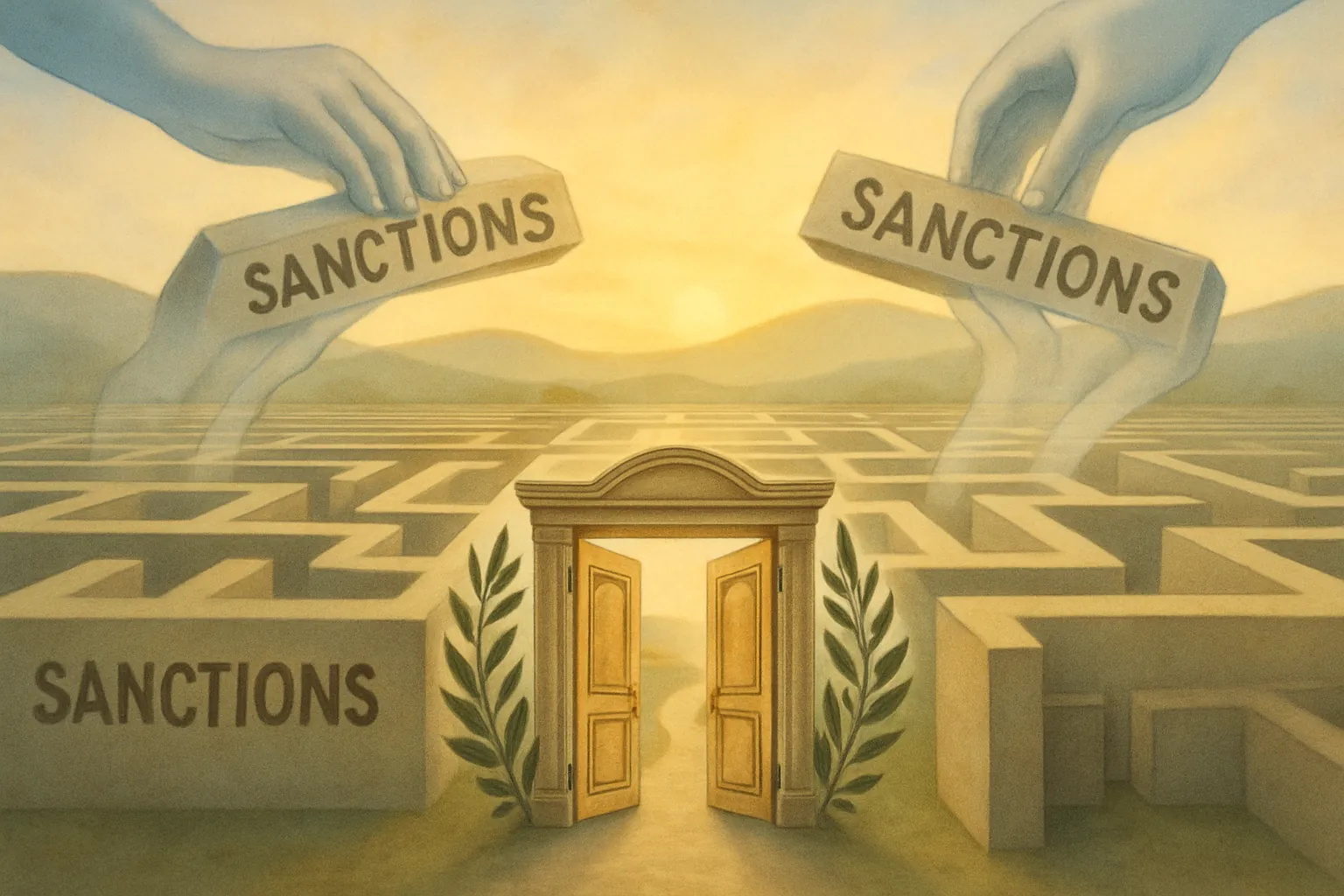
Potential Policy Shift as Trump Considers Lifting Sanctions
U.S. President Donald Trump recently raised the possibility of easing economic sanctions imposed on Syria, signaling a major shift in American foreign policy towards the war-torn nation. Trump’s announcement followed discussions with Turkey’s President Recep Tayyip Erdoğan and other Middle Eastern leaders who have advocated for an easing of sanctions to facilitate Syria’s economic recovery and political stabilization. The sanctions, originally imposed during the presidency of Bashar al-Assad, severely restricted Syria’s economic connectivity to global markets, significantly hampering reconstruction efforts following the prolonged civil war.
Trump, speaking to journalists before his departure for the Middle East, stated that the U.S. government is deliberating the lifting of economic sanctions to provide Syria with an opportunity for recovery and growth. “We may take them off Syria because we want to give them a fresh start,” Trump remarked. He underscored the humanitarian and strategic implications of such a move, aiming to stabilize a region that has witnessed relentless conflict over the past decade and a half.
“We’re going to have to make a decision on the sanctions, which we may very well relieve,” Trump further clarified, adding, “we want to see if we can help them out.”
This development follows Turkey’s active diplomatic moves, with Erdoğan playing a significant role in influencing the potential policy change. Turkey, a key NATO ally and a neighbor to Syria, has been heavily impacted by the prolonged instability and refugee influx stemming from the Syrian conflict.
Syria’s New Leadership and Regional Reactions
Central to this diplomatic shift is Syria’s new president, Ahmad al-Sharaa, a figure with a controversial background. Al-Sharaa became Syria’s interim leader following the overthrow of former President Bashar al-Assad in December, a change driven primarily by an Islamist alliance. Al-Sharaa, who was once imprisoned in Iraq for involvement in insurgencies against the post-2003 U.S.-led coalition presence, presents a dual narrative of involvement with extremist groups and subsequent political moderation.
Al-Sharaa’s appointment elicited mixed reactions within the international community. While Gulf states, typically wary of Iranian influence, have viewed al-Sharaa’s leadership as a potential counterbalance to Tehran’s regional power, allies like Israel remain cautious due to al-Sharaa’s former ties to extremist factions, including al-Qaeda linked groups such as Jabhat al-Nusra.
In a notable development indicating economic outreach, al-Sharaa reportedly proposed a minerals and oil deal reminiscent of agreements made between the U.S. and Ukraine, suggesting American companies could gain access to Syria’s natural resources in exchange for sanctions relief. This offer highlighted Syria’s urgent economic plight and its readiness to engage diplomatically to mitigate long-standing sanctions.
“This is an opportunity we must cautiously explore,” an unnamed U.S. economic advisor commented. “Access to natural resources could incentivize broader diplomatic relations and regional stability, provided strict controls and oversight are ensured.”
Secretary of State Marco Rubio is scheduled to meet Syria’s foreign minister in Turkey to further discuss avenues for restoring diplomatic relationships. Observers anticipate these discussions will be pivotal in shaping the trajectory of U.S.-Syria relations, potentially marking the first significant rapprochement since diplomatic ties deteriorated over a decade ago amid widespread violence and accusations of human rights abuses.
Historical Context and Broader Implications for Middle Eastern Stability
The current sanctions on Syria date back to the escalation of the country’s civil war in 2011. Initially targeted at the Assad regime, these sanctions aimed to curb human rights abuses and suppress financing for violence. Despite their intention, sanctions significantly impeded Syria’s capabilities for economic recovery and development, exacerbating the humanitarian crisis faced by millions of Syrian civilians.
Historically, sanctions have been a favored diplomatic tool of the United States and Western allies aiming to apply economic pressure to alter hostile governments’ behavior without resorting to overt military conflict. However, their effectiveness, especially in protracted conflicts, has been widely debated. Critics argue sanctions disproportionately impact ordinary citizens, contributing to poverty and humanitarian suffering without necessarily achieving political transformation objectives.
Trump’s proposed revision of the sanctions regime could thus mark a significant pivot away from punitive economic strategies toward more engagement-focused diplomacy. This approach aligns with broader U.S. strategic interests in stabilizing the Middle East, reducing Iranian influence, and addressing humanitarian crises that contribute to regional instability and global refugee flows.
Furthermore, Trump’s anticipated meeting with al-Sharaa in Saudi Arabia represents the first high-level interaction between American and Syrian leaders in over twenty years, indicating a potential shift toward normalization of diplomatic relations. The meeting underscores broader regional realignments, with Saudi Arabia and Turkey notably encouraging closer ties to contain regional threats and promote economic cooperation.
The implications of lifting these sanctions transcend Syria’s borders, potentially setting a precedent for dealings with similarly conflict-affected nations. International observers and analysts will closely monitor the outcomes of Trump’s planned diplomatic engagements, recognizing that any policy change could significantly reshape geopolitical dynamics across the Middle East.
As Washington navigates the delicate balance between strategic interests, regional security concerns, and humanitarian imperatives, the decision to lift or maintain sanctions on Syria will undoubtedly have lasting implications for U.S. foreign policy and regional stability.