

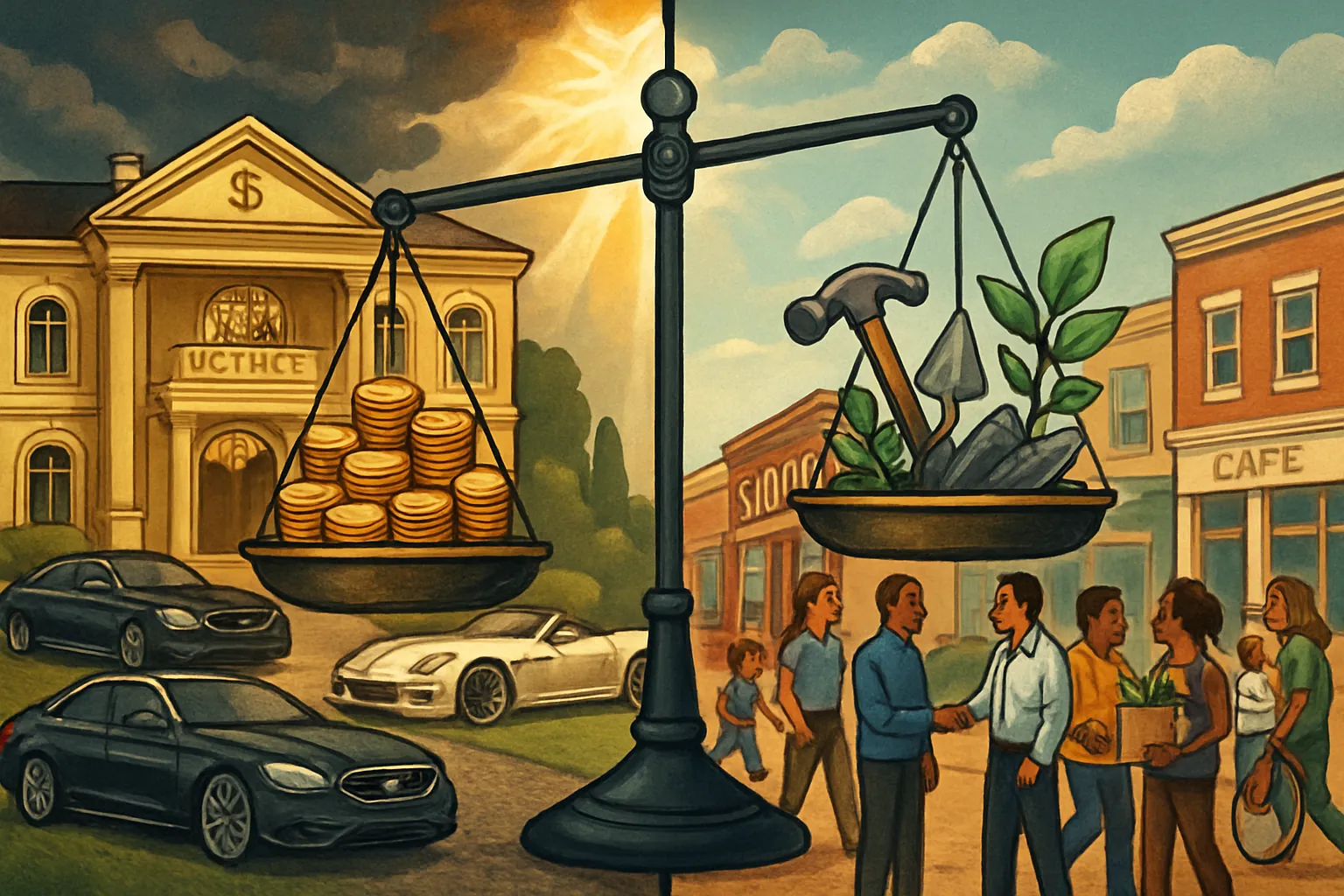
Trump’s Proposal Marks Notable Shift in GOP Tax Policy
President Donald Trump is urging congressional Republicans, including House Speaker Mike Johnson, to increase taxes for high-income earners, specifically targeting individuals making over $2.5 million annually and couples earning over $5 million. Trump’s plan seeks to raise the top income tax rate from its current 37% back to 39.6%, matching pre-2017 levels but at significantly higher income thresholds, as part of a legislative package dubbed the “big, beautiful bill”. This proposal represents a marked departure from traditional Republican positions that typically favor across-the-board tax cuts and minimal taxation of the wealthy.
President Trump’s proposal would establish a new tax bracket starting at $2.5 million, raising the top rate to 39.6%. This bracket far exceeds the previous top threshold of $626,350 for individuals set by the 2017 Tax Cuts and Jobs Act. Reverting or increasing the taxation of wealthy Americans is aimed at funding the extensions of tax cuts primarily benefiting middle- and working-class citizens, programs initially introduced under Trump’s administration.
However, the proposal has generated considerable debate within Republican circles. While some populist-aligned party members view Trump’s proposal favorably, fiscal conservatives have voiced opposition. House Speaker Mike Johnson, among others, has expressed reservations, emphasizing potential negative consequences on economic growth and job creation.
“Implementing a tax rate increase on the nation’s wealthiest individuals could disrupt our current economic trajectory and lead to diminished investment incentives,” warned one Republican congressional aide familiar with internal discussions.
The administration has also placed emphasis on closing the carried interest loophole as part of its legislative objectives. This loophole allows investment fund managers to pay reduced capital gains taxes on income derived from investment profits, an issue Trump has repeatedly spotlighted as a major inequity within the tax system.
Fiscal and Political Challenges Loom for GOP Leaders
As lawmakers negotiate the finer details of Trump’s tax proposals, Republican leadership faces significant strategic complexities. The inclusion of increased rates for wealthy taxpayers may impede the Republican majority’s ability to maintain party cohesion—particularly among legislators who traditionally oppose any form of tax increase.
Details from inside these legislative discussions show the administration’s efforts are not just limited to adjusting personal income tax brackets. Trump’s larger fiscal package intends to maintain crucial funding for Medicaid and avoid significant cutbacks to programs like the Supplemental Nutrition Assistance Program (SNAP), while simultaneously imposing additional taxes on owners of major sports venues. Such measures reflect a populist approach to funding government programs and providing relief to less affluent constituents.
Trump’s new tax proposals arrive at a politically sensitive time. With the 2017 Tax Cuts and Jobs Act nearing expiration at the end of this year, extending benefits for middle- and working-class families is a key priority for Republicans. However, the massive financial cost linked with permanently extending these benefits, estimated at approximately $11.95 trillion over the next decade, heightens internal divisions among fiscal conservatives who are demanding corresponding spending cuts to avoid ballooning deficits.
“Balancing the interests within our party, particularly between fiscal restraint and populist economic policies, is increasingly challenging,” noted a senior Republican strategist.
Speaker Johnson, facing the task of rallying party support ahead of legislative deadlines, must delicately navigate between competing factions within the party. Trump’s move complicates this effort by pushing traditionally conservative lawmakers to reconsider long-held economic beliefs.
Historical Context and Long-Term Implications for GOP Strategy
Historically, the Republican Party has championed tax reduction as a cornerstone of economic policy, notably reflected in the Reagan administration’s substantial tax cuts in the 1980s and continued through George W. Bush’s tax policies and ultimately the Trump-era 2017 cuts. Trump’s current strategy, calling for higher taxation on millionaires, signals a departure from this conventional GOP stance and marks an evolution towards populist economic positions aimed at broader appeal.
This shift in Trump’s stance follows earlier concerns expressed by the former President himself, who once cautioned that raising taxes on millionaires might prompt an exodus of wealthy individuals to more tax-friendly jurisdictions abroad. The current proposal thus represents a significant recalibration in his fiscal approach, potentially reshaping party ideologies.
Political analysts suggest Trump’s proposal might have broader implications for the GOP’s future economic messaging, especially given current economic challenges facing middle-class Americans. By aligning closely with populist economic policies, Trump is positioning himself and his allies within the party as advocates for working-class financial relief, potentially influencing voter perceptions in upcoming elections.
If enacted, the higher taxes on the wealthy could redefine GOP economic priorities, particularly concerning how the party balances fiscal discipline with socioeconomic fairness. Congress’s handling of this issue will likely serve as a bellwether for Republican economic policy going forward, potentially setting precedents for future legislative negotiations and electoral platforms.
“How Republicans respond to Trump’s tax hike proposal could reveal the party’s future economic trajectory,” explained an economic policy expert at a Washington-based think tank. “The decision may redefine the GOP’s identity in addressing economic inequality and populism.”
As the debate continues in Congress, the final determination of these proposals—and the reaction among Republican lawmakers—will significantly shape the legislative agenda through the upcoming electoral cycle and beyond.