

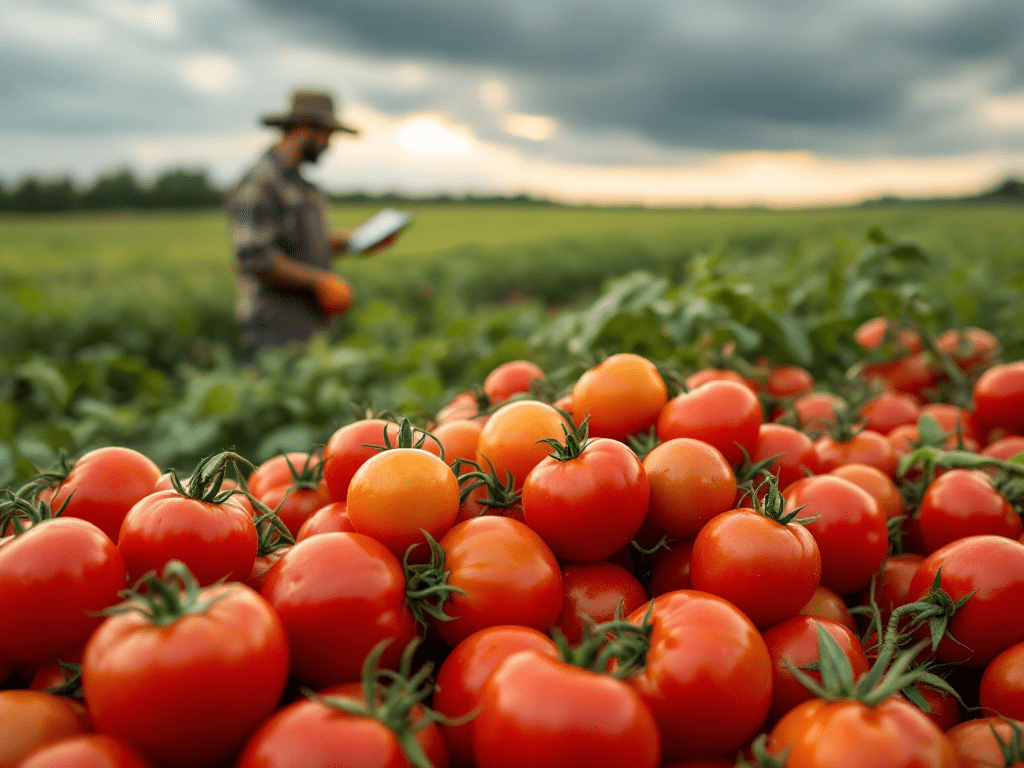
Tomato Recalls Triggered by Salmonella Concerns
A significant recall involving tomatoes has expanded across multiple states in the United States due to potential contamination with Salmonella, a bacteria capable of causing severe foodborne illnesses. Two separate companies, Ray & Mascari Inc. and Williams Farms Repack LLC, initiated voluntary recalls after discovering potential contamination risks. The recalls were triggered after suppliers reported possible Salmonella contamination within their facilities, leading to immediate action to protect public health.
Ray & Mascari Inc., an Indianapolis-based company, specifically recalled its “4-Count Vine Ripe Tomatoes,” packaged in plastic clamshell containers, distributed through Gordon Food Service Stores in 11 states including Ohio. This precautionary recall followed an alert from Hanshaw & Capling Farms, a supplier based in Immokalee, Florida, which had initiated its own recall due to concern over Salmonella contamination in their facility.
In a related move, Williams Farms Repack LLC from Lodge, South Carolina, recalled its tomatoes distributed primarily to Georgia, North Carolina, and South Carolina. Their recall includes several tomato packaging formats: 5×6 25lb, 6×6 25lb, Combo 25lb, 4×4 2-layer, 4×5 2-layer, 60ct 2-layer, 60ct 18lb loose, XL 18lb Loose, and 3-count trays bearing UPC 0 33383 65504 8. These tomatoes were marketed under both Williams Farms Repack and H&C Farms labels, and distributed between April 23 and April 28. The FDA has advised consumers to not consume the recalled products and instead return them for a full refund.
No reported illnesses have been associated with either recall as of the latest information.
“Consumers who have purchased any of these products are urged to discard them immediately or return them for a full refund to minimize the risk of potential illness,” said an FDA advisory statement.
Details and Timeline of the Recall Events
The initial recall was announced by Ray & Mascari Inc. following an alert from their supplier, Hanshaw & Capling Farms. The supplier reported potential Salmonella contamination, prompting Ray & Mascari Inc. to swiftly recall “4-Count Vine Ripe Tomatoes” that were distributed through Gordon Food Service Stores throughout 11 states, including Ohio. The products were packaged in plastic clamshell containers labeled clearly as “VINE RIPE TOMATOES.”
Around the same period, Williams Farms Repack LLC, located in South Carolina, also initiated its voluntary recall. The company acted upon receiving information from Southeast Tomato Distributors about possible contamination involving tomatoes sourced from H&C Farms. The recalled tomatoes were marked with multiple packaging formats, significantly increasing the scope of the recall notice.
Salmonella symptoms can emerge within 6 hours to 6 days following consumption of contaminated food, presenting as fever, diarrhea, nausea, abdominal pain, and vomiting. While most infections resolve without treatment in approximately 4 to 7 days, complications can occur, particularly among vulnerable individuals. Salmonella can be especially dangerous for young children, elderly adults, and individuals with compromised immune systems.
The FDA continues monitoring the situation closely, and no illnesses connected to these recalls have been reported as of now.
“We encourage consumers to stay informed through FDA alerts and check their pantries, fridges, or restaurants carefully to discard potentially affected products,” said an FDA spokesperson.
Historical Context and Broader Implications
This incident is not an isolated occurrence, as Salmonella outbreaks linked to fresh produce have periodically surfaced over the past few years. The Centers for Disease Control and Prevention (CDC) records indicate that Salmonella is among the most common bacterial causes of foodborne illnesses in the United States, affecting more than 1 million people annually. Produce items such as tomatoes have historically been identified as common vehicles for Salmonella outbreaks, largely due to contamination during production, harvesting, or distribution.
The broader implications surrounding such recalls highlight the importance of stringent food safety procedures, from supply chain traceability to comprehensive pathogen testing. Industry experts emphasize the increased risks associated with supply chains growing ever more complex and interconnected, emphasizing the need for strong oversight and rapid response capabilities in the food industry.
Given the significant economic and public health impacts, recalls like this often lead to increased scrutiny of food handling practices and may prompt policy changes or enhancements in regulatory oversight. This latest recall underscores not only the critical role of food safety protocols but also the need for swift and transparent communication among suppliers, distributors, retailers, public health agencies, and consumers.
Consumers are once again reminded about the necessity of being vigilant and maintaining awareness regarding food safety and recall announcements.
“Recurrent recalls due to Salmonella contamination highlight an ongoing need for rigorous industry standards and practices, proactive supplier management, and active consumer engagement to prevent and minimize health risks,” states Dr. Linda F. Harris, a food safety expert at the University of California, Davis.
Given the current recall, consumers are encouraged to regularly monitor announcements from health and safety agencies, including the FDA and CDC, and to immediately comply with product recalls to maintain personal and public health safety.