

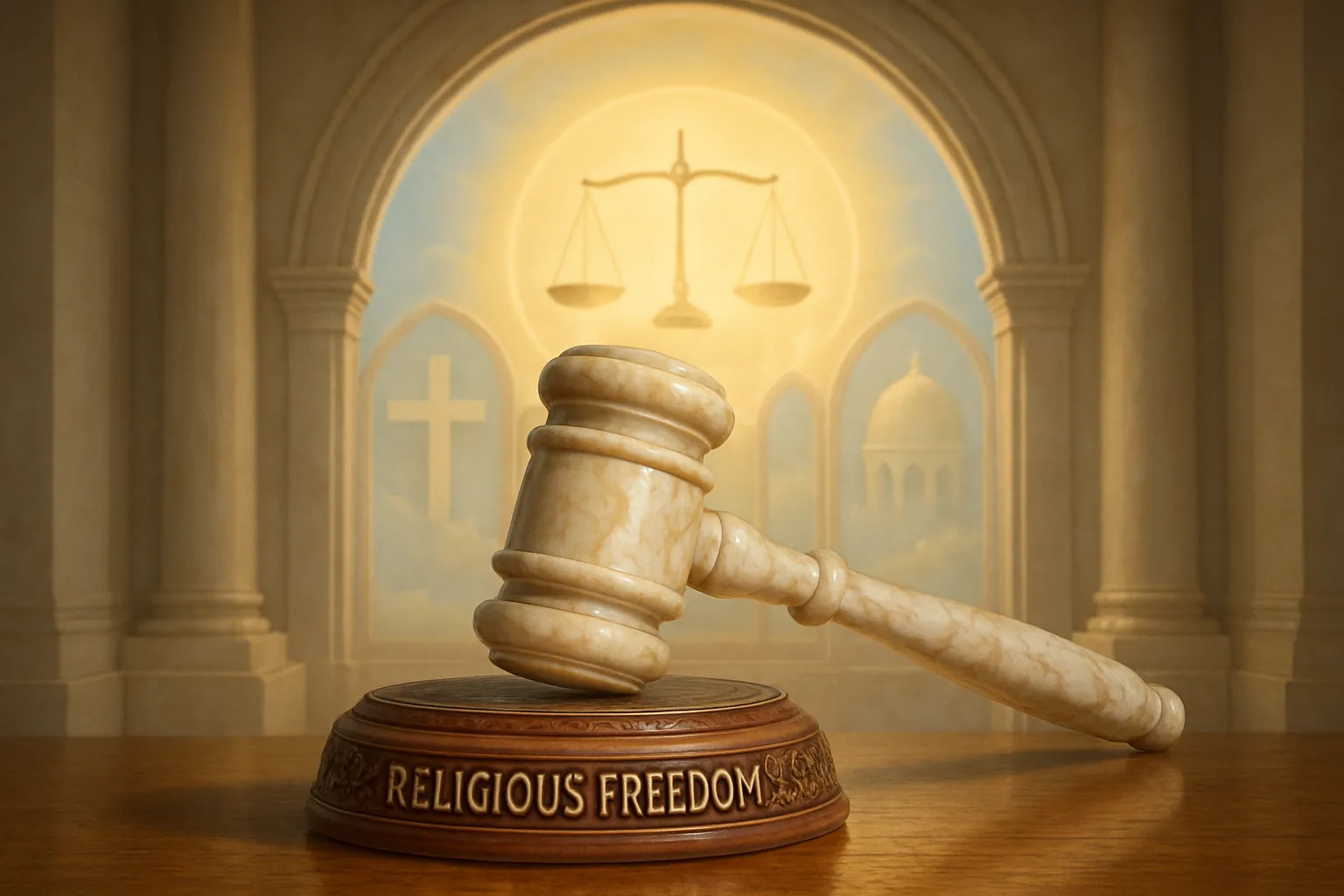
Supreme Court Unanimously Finds Wisconsin Breached Constitutional Boundaries
The U.S. Supreme Court unanimously ruled that Wisconsin violated the First Amendment rights of the Catholic Charities Bureau by denying it an exemption from unemployment taxes. The ruling, delivered by Justice Sonia Sotomayor, emphasized the mandate for strict governmental neutrality between different religious denominations, finding that Wisconsin’s application of its unemployment compensation law unfairly differentiated among religious groups based on theological distinctions.
Wisconsin law previously exempted religious organizations from paying unemployment taxes if their primary mission involved religious purposes and if the organizations were supported or controlled directly by a church. The state had argued Catholic Charities did not qualify for this exemption because their services were broadly secular—such as aid to the disabled, elderly, and incapacitated—and partially funded through public money.
Justice Sotomayor wrote that Wisconsin’s denial imposed an impermissible “denominational preference,” contravening the First Amendment:
“The First Amendment mandates government neutrality between religions and subjects any state-sponsored denominational preference to strict scrutiny. The Wisconsin Supreme Court’s application of [the law] imposed a denominational preference by differentiating between religions based on theological lines.”
Catholic Charities, affiliated with the Diocese of Superior, serves thousands across northern Wisconsin through community programs not limited to Catholic recipients. The organization challenged the state’s interpretation, stating that the nature of their charitable services should not diminish their religious identity or qualification for exemption.
Justice Clarence Thomas provided a concurring opinion strongly criticizing the Wisconsin Supreme Court’s ruling for violating the “church autonomy doctrine.” Thomas argued explicitly that Catholic Charities and similar entities are intrinsically linked to their governing religious institutions and thus entitled to protection from government interference:
“The Wisconsin Supreme Court violated the church autonomy doctrine by unlawfully attempting to redefine the internal governance of the Diocese of Superior,” Thomas wrote, expressing concern over potential government intrusion into religious governance structures.
Broader Implications and Potential Repercussions of the Ruling
The decision could significantly affect Wisconsin’s unemployment system and has sparked concerns about a possible exodus of religiously affiliated organizations from state unemployment programs. Critics argue that this ruling could initiate a broader withdrawal of similar employers, such as religious hospitals and schools, from participating in joint state-federal unemployment insurance systems. Such a departure would not be unique to Wisconsin but could potentially destabilize unemployment insurance programs nationwide, as similar frameworks exist in 46 other states.
Wisconsin officials previously warned that deciding in favor of Catholic Charities could incentivize other large religiously affiliated employers to withdraw from the state unemployment compensation program. The state expressed fears that this kind of shrinkage could threaten the stability and effectiveness of such social safety nets:
“A decision favorable to Catholic Charities potentially could destabilize the joint federal-state unemployment compensation programs established for decades,” stated Wisconsin state officials in their pre-ruling arguments.
This ruling aligns with recent patterns where the conservative-majority Supreme Court has often favored religious groups in disputes involving religious liberty claims. However, it also clearly reinforces the principle that religious neutrality is critical, requiring careful handling by government entities when interacting with religiously affiliated organizations.
Historical Context and Continued Debate Over Church-State Separation
Church-state separation has long been a contentious issue in the United States, with roots tracing back to the nation’s early history. The First Amendment explicitly prohibits the government from establishing or favoring specific religious doctrines or institutions. Historically, the Supreme Court has navigated complex boundaries, sometimes siding with religious freedoms and other times upholding rigorous secular standards, prompting ongoing national conversation on the appropriate delineation between church and state.
In recent years, the Supreme Court has increasingly entertained cases involving religious groups asserting exemptions from generally applicable laws. Decisions in cases like Masterpiece Cakeshop v. Colorado Civil Rights Commission (2018) and Little Sisters of the Poor v. Pennsylvania (2020) underscore a trend towards recognizing broader religious liberties and protections under federal law.
Besides reinforcing the jurisprudential principle of neutrality, the Court’s decision reaffirms that religious organizations performing secular social welfare activities may still qualify for religious exemptions from taxation or other regulatory requirements. Experts note that this decision sets a precedent, compelling states to avoid excessively stringent scrutiny of such groups’ religious credentials based solely on their publicly accessible services. Constitutional law expert Professor Rebecca Sullivan remarked that the ruling exemplifies how courts will increasingly confront nuanced situations involving religious institutions that serve both religious and secular public interests:
“This unanimous ruling highlights an ongoing tension in interpreting religious liberty; namely, how far civil regulatory frameworks can evaluate religiously affiliated groups without infringing upon constitutional guarantees,” Sullivan noted.
The landmark decision in favor of Catholic Charities signals that religious organizations can continue community aid work without risking their religious exemptions, provided these activities align closely enough with their broader theological mission.
Overall, the unanimous Supreme Court decision compellingly reinforces religious neutrality principles under the Constitution, establishing robust precedent regarding religious organizations’ governance and operational autonomy within state regulatory systems.