

Overnight Drone Attacks Ramp Up Conflict
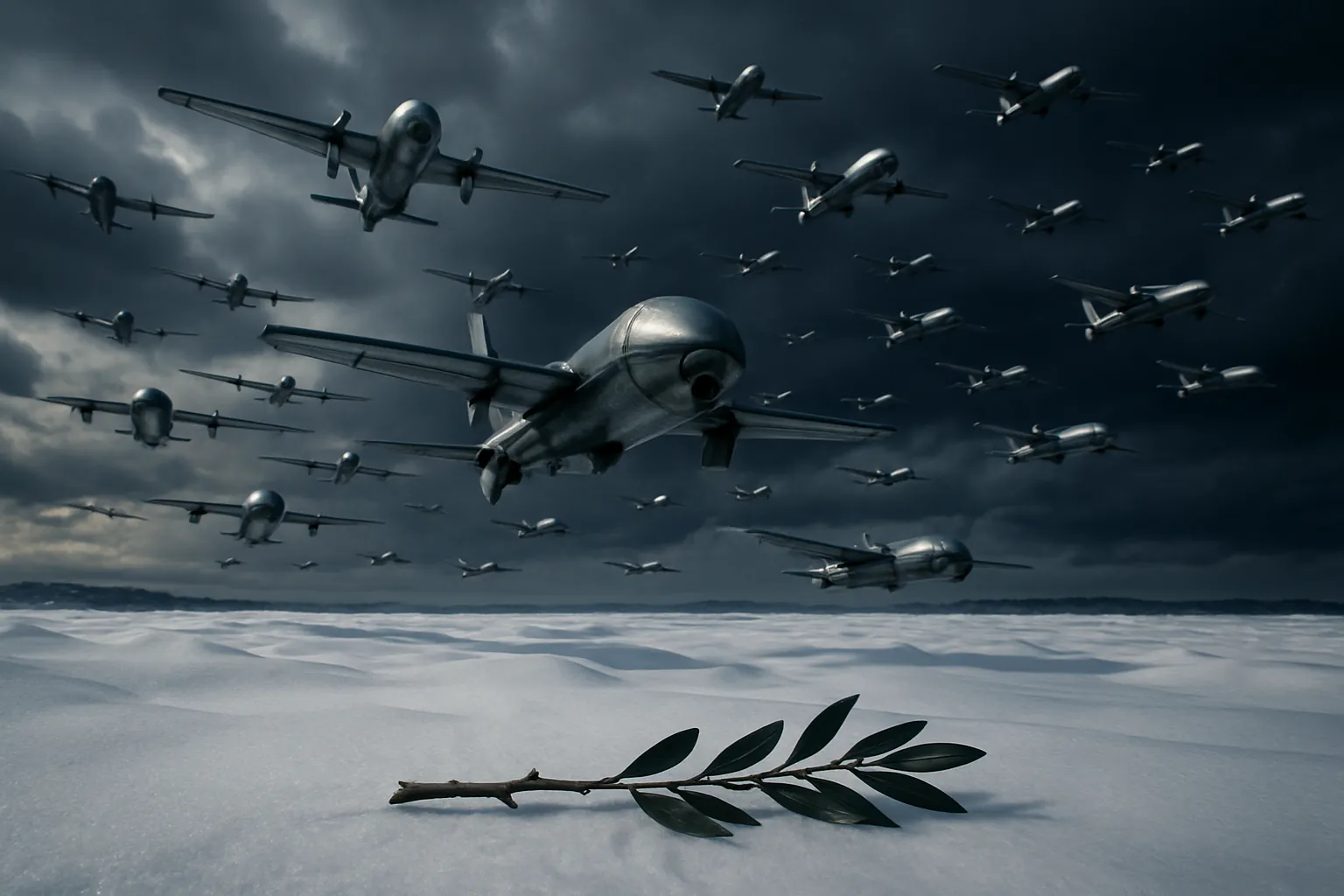
Russia has escalated the ongoing conflict by launching more than 100 drones at multiple regions across Ukraine, effectively rejecting international calls for a 30-day ceasefire aimed at facilitating peace negotiations. Ukraine’s Air Force reported that 108 drones, including Iranian-made attack drones and numerous simulator decoys, were fired overnight starting around 11:00 P.M. local time on Sunday. Ukrainian authorities indicated that 55 of these attacking drones were successfully intercepted by air defenses, though some drones reached their intended targets, causing notable damage.
Among the areas severely affected by the drone strikes were the southern port city of Odesa, the Mykolaiv region, the eastern Donetsk region, and areas around Zhytomyr. The attacks particularly targeted civilian infrastructures, such as railway lines. A civilian freight train in Donetsk was directly hit, injuring its driver, and further escalating the humanitarian toll of the nearly three-year-old conflict. Ukrainian national railway operator Ukrzaliznytsia confirmed disruptions and damage but has vowed to undertake repair works swiftly.
Highlighting the complexity of the assault, Ukrainian military sources noted that 30 drones failed in their mission entirely due to technical failures, underscoring the use of deceptive tactics employed by Russian forces.
“The intensity of these attacks not only defies the spirit of diplomatic attempts but also severely compromises civilian safety and critical infrastructure,” said Ukrainian Foreign Ministry spokesperson Oleh Nikolenko.
This escalation occurred mere hours after Ukrainian President Volodymyr Zelenskyy publicly accepted Russian President Vladimir Putin’s offer for face-to-face talks on Thursday in Istanbul, Turkey. Zelenskyy, backed by European allies including France, Germany, Britain, and Poland, stipulated that a ceasefire must precede any substantial negotiations. Putin, however, rejected the ceasefire, criticizing Western approaches as “ultimatums” and “anti-Russian rhetoric.”
International Outcry and Diplomatic Efforts
The international community has swiftly condemned Russia’s drone strikes and urged for restraint and dialogue. British Prime Minister Sir Keir Starmer emphasized that the actions taken by Putin would significantly impact Russia’s diplomatic standing, stating “if Putin is serious about peace, he has a chance to show it; otherwise, there will be a response.” This sentiment was echoed across European capitals, where leaders have called the conflict a significant challenge to regional stability and security.
The deadly toll of the conflict continues to rise, including foreign humanitarian workers aiding recovery and clearance operations in conflict zones. Recently, an Australian man—a former soldier working for a US-based charity clearing landmines—and his British colleague were killed near the eastern city of Izyum, marking the grim consequences of prolonged violence for international personnel active in relief efforts.
In response to the latest escalation, UK’s Foreign Secretary David Lammy announced plans to host European Union counterparts to systematically address intensified support for Ukraine and bolster regional defense cooperation ahead of a planned summit in the UK.
Pope Leo XIV, among other global figures, voiced deep concern over the renewed violence, reiterating calls for immediate humanitarian measures:
“Never again war. The release and safe return of prisoners of war and kidnapped children must be prioritized,” said Pope Leo XIV during an address emphasizing the urgent need for peace and humanitarian relief.
The Broader Implications and Historical Context of the Conflict
The ongoing Ukraine conflict has its roots in complex historical dynamics and increased geopolitical tension significantly catalyzed by Russia’s annexation of Crimea in 2014. Since the full-scale invasion that began in February 2022, tens of thousands of soldiers have died, alongside over 10,000 civilian fatalities. According to United Nations figures, approximately one-fifth of Ukraine’s population has been displaced, either internally or as refugees abroad.
This latest refusal to honor international calls for a ceasefire underscores a broader pattern seen over the past several years. While Russia has intermittently signaled openness to negotiations, consistent demands for an unconditional ceasefire, as articulated by Ukraine and its western partners, have regularly been rejected. Consequently, peace talks remain at an impasse, with each side accusing the other of insincerity and brinkmanship.
Strategically, the use of drones, particularly Iranian-made Shahed models that have gained notoriety for their destructive capabilities, highlights a troubling trend in warfare tactics, where relatively inexpensive but highly effective technologies are increasingly employed, complicating defense strategies. Military analysts have repeatedly pointed to drones as pivotal in modern conflicts, significantly reshaping battlefield dynamics across multiple global hotspots.
The European Union and the US continue to threaten additional economic sanctions on Moscow. These targeted economic pressures intend not only to curb Russian military funding but also to deliver a broader diplomatic message about unified international support for Ukrainian sovereignty and territorial integrity.
How Russia responds diplomatically in the coming days, particularly during the proposed direct talks scheduled in Istanbul, could critically define the trajectory of peace initiatives moving forward. With each military escalation, the prospects for lasting peace appear increasingly fragile, and the certainty of continued international diplomatic pressure remains a crucial factor shaping this ongoing crisis.