

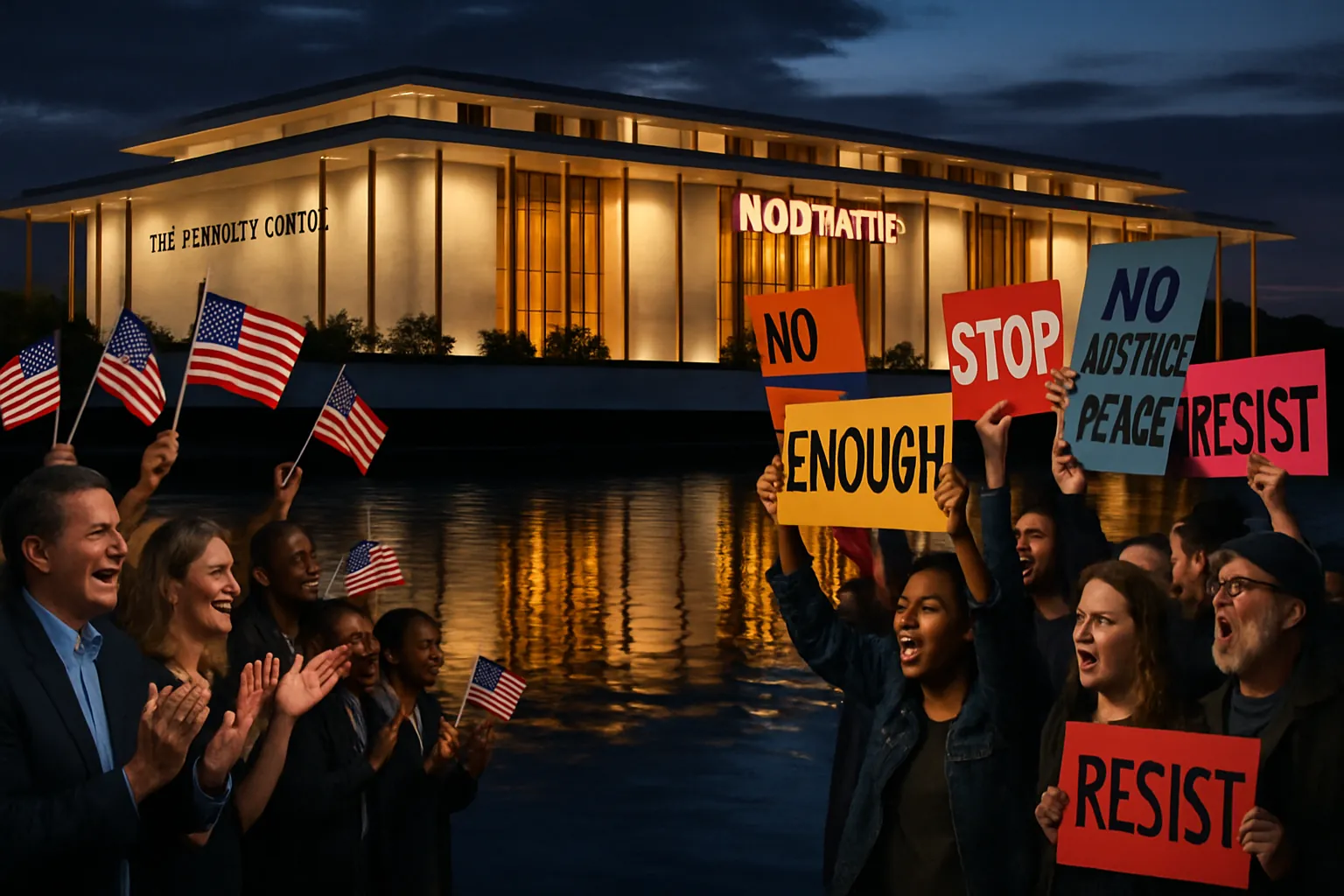
President Trump’s Arrival at the Kennedy Center Sparks Diverse Reactions
President Donald Trump’s attendance at the Kennedy Center for the opening night of the award-winning musical “Les Misérables” attracted significant attention, generating a mixed response from the attendees. The evening marked Trump’s first appearance at the Kennedy Center since assuming the position of chairman and initiating a cultural shift within the institution. The president was greeted by a combination of cheers, boos, and spontaneous chants of “USA! USA!” capturing the polarized sentiments among the audience.
This event came with an extraordinary $2 million price tag for some attendees, who were offered exclusive seating, accompanied by the opportunity to attend a reception and photo session with Trump. However, the high cost and Trump’s presence led to protests from some members of the cast and audience, with a few performers reportedly boycotting the event to demonstrate their disapproval.
President Trump addressed reporters, rationalizing his involvement in the Kennedy Center’s management, stating, “I couldn’t care less. All I do is run the country well.” This statement was in response to queries about his controversial decisions regarding the arts institution, including replacing former trustees appointed by Joe Biden and dismissing Kennedy Center President Deborah F. Rutter.
“It’s clear that President Trump’s presence here tonight has sharply divided the audience—reflecting broader national tensions about culture and political discourse,” remarked cultural analyst Amanda Williams.
Notably, the president’s attendance coincided with applause for a group of drag queens upon their entry, highlighting further the evening’s underlying cultural and political tensions.
The Kennedy Center Undergoes Changes Under Trump’s Stewardship
The Kennedy Center, historically viewed as a politically neutral hub for arts and culture, has undergone substantial transformations since Trump appointed himself chairman and ushered in a new board of trustees dominated by his political allies. This unprecedented move included the appointment of close associates, notably Susie Wiles, Trump’s chief of staff, and Vice President JD Vance’s wife, Usha Vance. These changes were met with criticism from various quarters, including concerns about potential political interference in artistic programming.
The controversy intensified after Trump’s administration canceled millions of dollars in previously awarded federal grants for arts and cultural organizations. Additionally, attempted dismissals within major cultural institutions such as the National Portrait Gallery have raised alarms among advocates for artistic independence.
Further illustrating the complexities of the event, Vice President JD Vance drew criticism for mistakenly conflating the plotlines of “Les Misérables” and “Sweeney Todd” in an attempted humorous remark. This misstep was viewed by critics as unaware of the symbolic weight of “Les Misérables,” known for themes of resistance and social justice.
“Vice President Vance’s remark demonstrates a deeper disconnect or disregard for the powerful cultural narratives that resonate with so many Americans,” said theater critic Jason Leunig.
Financial repercussions appear evident through a marked decline in ticket sales and subscription revenues. Reports indicate a significant drop of 36% in year-on-year subscription revenues, with theater subscriptions specifically plummeting by as much as 82%. These financial indicators suggest potential challenges for the Kennedy Center in maintaining its operational viability and traditional audience base under the new direction imposed by Trump.
Cultural and Political Implications of Trump’s Arts Policies
Historically, the Kennedy Center has represented a bipartisan commitment to fostering cultural and artistic expression in the United States. Established in 1971 as a living memorial to President John F. Kennedy, the center has traditionally been insulated from overt political influences. Experts now fear that Trump’s recent interventions might set concerning precedents, potentially diminishing the Kennedy Center’s status as a cultural sanctuary.
California Governor Gavin Newsom highlighted the irony of President Trump attending a production like “Les Misérables,” given its strong themes of rebellion against oppression. Governor Newsom’s public comments underscored widespread perceptions that Trump’s political positions stand at odds with the production’s underlying messages of justice and resistance.
Moreover, prior to attending the performance, Trump commented on pressing national and international matters, including Middle East tensions and domestic protests. He expressed willingness to extend trade negotiation deadlines before new tariffs take effect, citing “progress” with nations like Japan and South Korea. Trump also defended using National Guard troops in response to civil unrest in Los Angeles, criticizing local officials for inadequate police response.
“The juxtaposition of Trump’s conservative political strategies and the inherently revolutionary themes of ‘Les Misérables’ create a profound, if uneasy, reflection of current American culture,” noted historian Dr. Emily Carter.
The mixed reactions at the Kennedy Center underscore deeper cultural divides that extend far beyond one night’s performance. As Trump’s administration continues influencing America’s cultural institutions, the outcomes of these policies will likely remain subjects of debate among policymakers, cultural commentators, and artists. Observers suggest such developments will deeply affect how arts and culture are perceived—and supported—by future political administrations and the American public.