

Historic Election and Political Participation
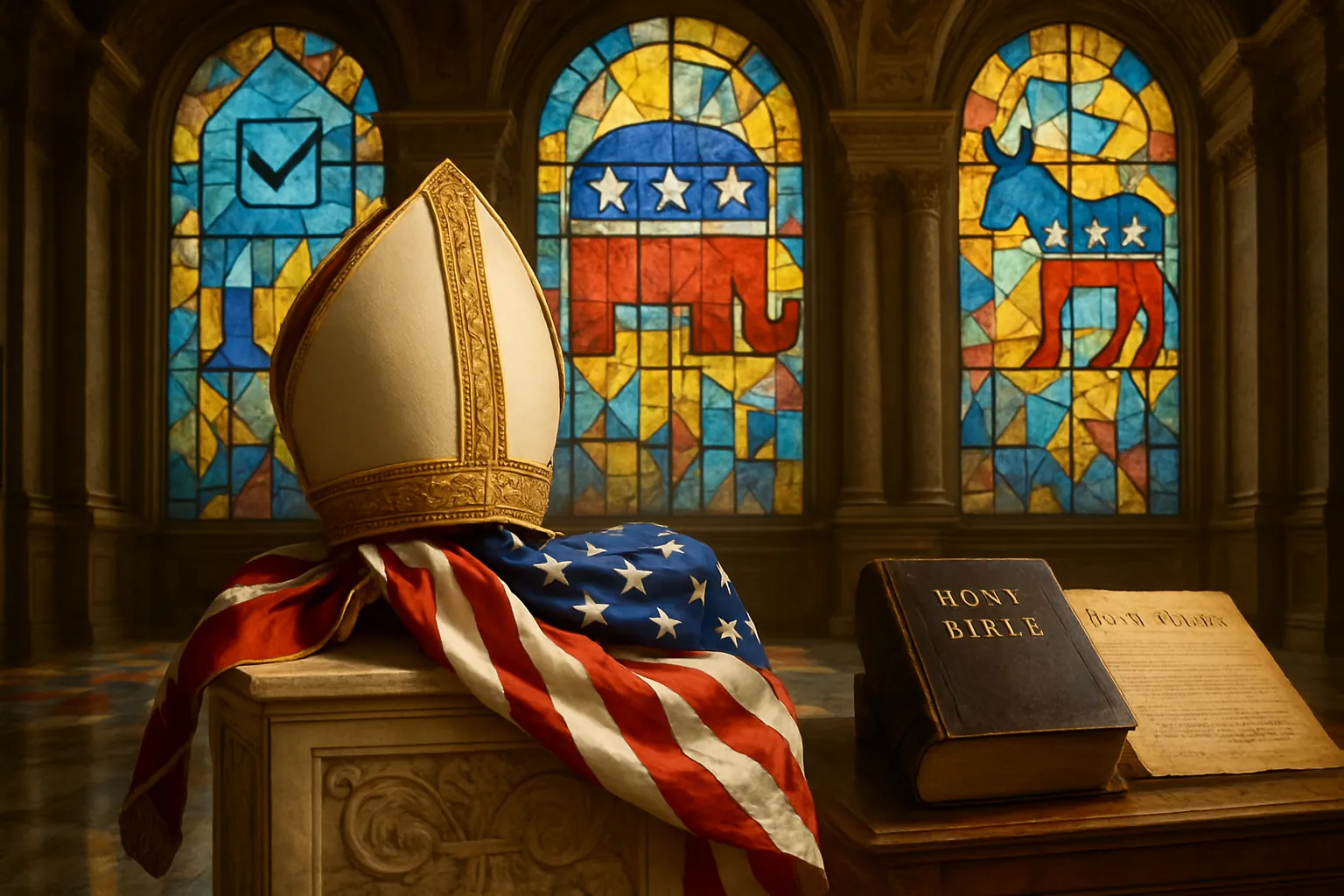
In an unprecedented event, Pope Leo XIV, who was previously known as Robert Prevost and is notably the first American pope, has a documented history as an active participant in U.S. politics, specifically voting in several Republican primary elections. Election records reveal that he voted consistently in Republican primaries during 2012, 2014, and 2016. Although Illinois law prohibits formal party registration, limiting insights into official party affiliation, his exclusive participation in GOP primaries conveys a clear political leaning.
Born in Dolton, Illinois, and later based in Chicago, Pope Leo XIV garnered significant attention upon his historical ascension as leader of the Roman Catholic Church. Prior to his appointment, his political engagement extended into recent years, including the notable absentee ballot he cast for the 2024 presidential election while residing abroad.
Chief data officer at Pulse Decision Science, Matt Knee, stated that based on voting behavior and public statements, Pope Leo XIV fits the profile of a former or Never Trump-type ex-Republican. While he actively engaged in Republican primaries prior to 2016, he notably ceased GOP primary participation following Donald Trump’s emergence as a leading figure within the party.
Pope Leo XIV’s criticisms of Trump’s immigration policies are also well-documented, particularly through his social media presence, where he has shared critical views of the former president and his immigration stance.
“His voting record, coupled with his social media criticisms, points to a political persona that aligns closely with moderate or Never-Trump Republicans,” Knee remarked.
This revelation sparked conversations among observers and supporters alike about the implications of a pope with tangible ties to American party politics, particularly in the context of the polarized modern political landscape.
Chronology of Electoral Engagements
Pope Leo XIV’s political activities span decades, with records indicating he participated in all general elections between 2000 and 2008, followed by ballots cast again in 2012, 2014, 2018, and most recently in 2024. Illinois does not require voters to declare a party affiliation explicitly; however, his consistent choice to vote in Republican primaries provides an implicit indication of his political preferences.
While records confirm his participation in the 2024 presidential election, noticeably absent is evidence of participation in the highly contentious 2020 presidential and 2022 midterm elections. This hiatus aligns with reports suggesting a distancing from Republican primaries after the ascendancy of Donald Trump within the GOP.
His public criticisms toward prominent Republican figures, including Vice President JD Vance on immigration issues, have also reinforced perceptions of his moderate Republican or Never-Trump positioning. Pope Leo XIV notably amplified voices such as Democratic Senator Chris Murphy’s call for gun control in the wake of the 2017 Las Vegas shooting, highlighting his willingness to engage critically with policy debates beyond strict party lines.
“His selective engagement with elections post-2016 reinforces the narrative of a thoughtful and perhaps increasingly moderate political stance,” observed political analyst Juliana Rossi.
This electoral history provides valuable context in interpreting the political foundations shaping the worldview and leadership approach of Pope Leo XIV as he navigates his role on the global stage.
Historical Context and Broader Implications
The intersection of politics and religion has long held influence over global affairs. Historically, Popes have often participated implicitly or explicitly in global political discourses, though rarely with documented personal participation in national elections. The explicit confirmation of Pope Leo XIV’s voting history and former political behavior has engaged discussions around the boundaries and interactions between religious leadership and secular political involvement.
Pope Leo XIV, previously serving as Bishop of Chiclayo in Peru until appointed prefect of the Dicastery for Bishops in Rome in 2023, carries global ecclesiastical experiences alongside his American political heritage. His previous missionary work in Peru highlights a significant international orientation, coupled now with his notable domestic political activities.
The revelation of his past political actions has sparked dialogues among Vatican observers and religious scholars regarding potential influence on his papal priorities and policymaking. Papal historians reference the delicate balance popes must maintain in addressing global moral concerns while navigating diverse political landscapes.
His documented criticisms and political distancing from certain GOP policies may suggest a nuanced approach towards contemporary socio-political issues, potentially signaling a moderation contrasting with some of his conservative predecessors.
“His political past could reflect a balanced approach to controversial issues, potentially shaping his diplomatic engagements significantly,” noted Vatican analyst Dr. Timothy O’Connor.
President Donald Trump congratulated Pope Leo XIV on social media, expressing pride in the historic election of the first American Pontiff. The Pope’s ascension has not only historical but potentially transformative impacts on the global political-religious interface, as observers speculate how his political experiences might influence Vatican diplomacy and international religious affairs moving forward.