

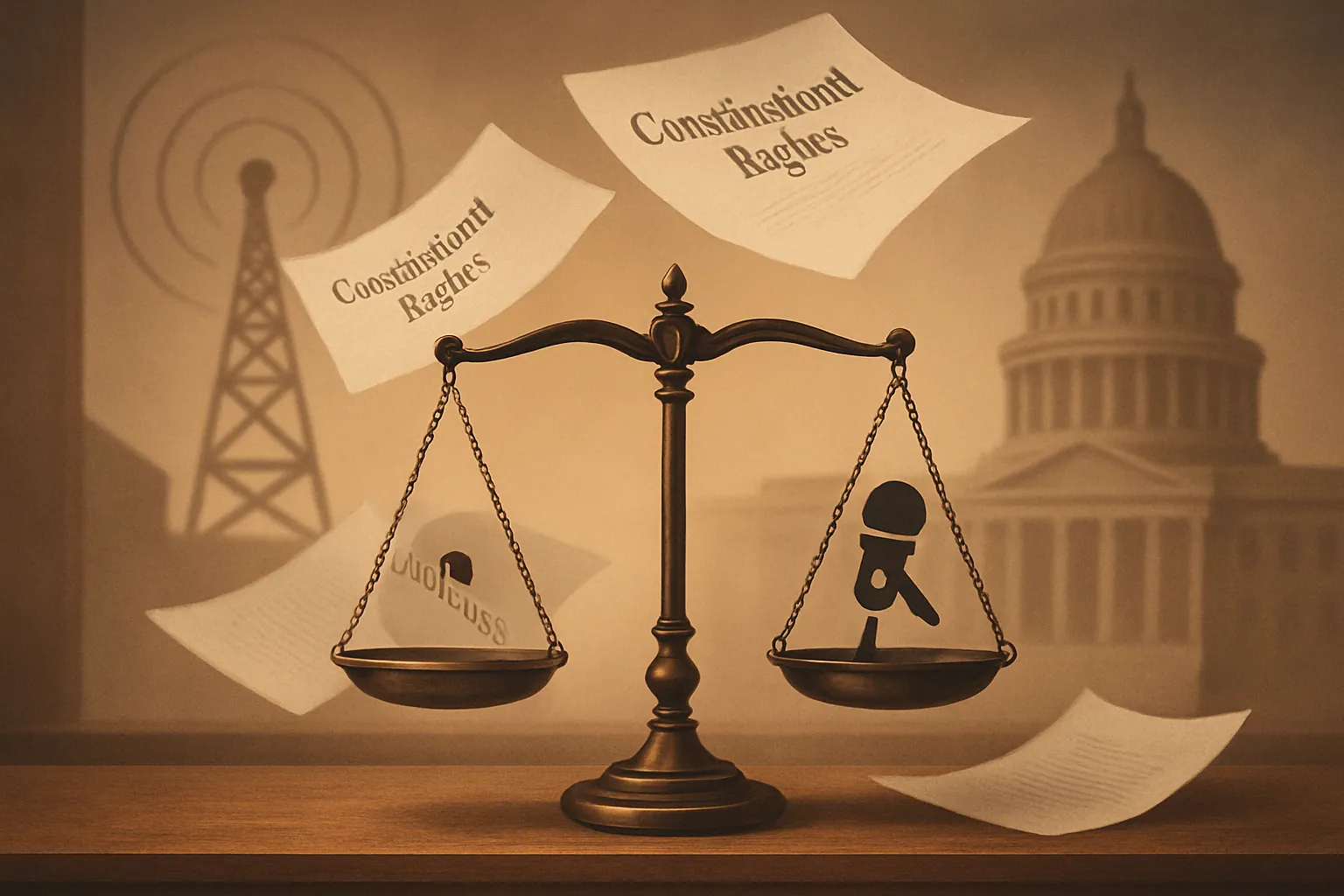
NPR Takes Legal Action Against Trump Administration Over Funding Cuts
National Public Radio (NPR), alongside three Colorado public radio stations, has filed a lawsuit in federal court challenging a recent executive order issued by President Donald Trump. The order, titled ‘Ending Taxpayer Subsidization of Biased Media,’ calls for the complete elimination of federal funding to public broadcasters NPR and PBS, alleging bias in their reporting. This lawsuit, filed at the U.S. District Court for the District of Columbia, asserts that the presidential directive infringes on the First Amendment rights of broadcasters, accusing the administration of retaliatory action intended to penalize NPR for critical coverage.
The lawsuit identifies President Trump along with members of his administration, including White House budget director Russell Vought, Treasury Secretary Scott Bessent, and Maria Rosario Jackson, Chair of the National Endowment for the Arts, as defendants. NPR President and CEO Katherine Maher describes the executive order as a direct attempt to undermine media independence, explicitly criticizing its intent as politically driven and harmful to public discourse.
The lawsuit emphasizes that the presidential directive violates established constitutional principles by circumventing Congressional authority over budgeting and spending.
The plaintiffs argue that the administration’s moves explicitly contradict the intentions of Congress, as previously articulated in the Public Broadcasting Act. This Act emphasizes promoting independent media free from governmental influence—a cornerstone of American democratic principles that NPR claims is being undermined deliberately by the Trump administration’s directive.
“This executive order represents textbook retaliation against organizations that dare to uphold journalistic integrity and autonomy,” Maher noted in a public statement regarding the suit.
The executive order, signed on May 1, mandates federal agencies to halt all funding for NPR and PBS, which receive crucial financial support via the Corporation for Public Broadcasting (CPB), an entity chartered by Congress.
Impact on Colorado’s Local Radio Stations
The stakes for Colorado-based radio stations such as Colorado Public Radio (CPR), Aspen Public Radio, and KSUT Public Radio in Ignacio are especially high. While NPR itself only derives about 1% of its funding from CPB grants, local public radio stations and networks often depend heavily on this financial support, sometimes constituting up to 10% of their operating budgets. A loss or substantial reduction in federal aid could force these stations to drastically scale back services or eliminate critical programming and community outreach initiatives entirely.
In the legal filing, Colorado Public Radio executives expressed significant concerns over the potential impacts of the executive order, arguing that such cuts would seriously impede their ability to serve local communities by providing essential information, educational content, and emergency broadcasts.
“Local public broadcasters have always operated on slim margins,” explained Max Wycisk, CEO of Colorado Public Radio. “This sudden withdrawal of federal support would be crippling and would severely curtail our role in providing reliable, unbiased information to our listeners.”
Historically, the CPB has played an essential role in supporting public broadcasting markets across rural and underserved urban communities, helping ensure equitable access to media. For public radio stations in smaller markets, federal contributions serve as lifelines, enabling them to deliver balanced, diverse perspectives often unavailable in commercial media settings.
According to recent financial disclosures, federal funding accounts for approximately 10% of the yearly budgets of smaller stations like KSUT. This makes them particularly vulnerable to budget shifts initiated by policy changes or executive orders such as this one.
Historical Context and Broader Implications
This litigation takes place amid continued tension between the Trump administration and the broader media community, particularly public broadcasters, which have faced repeated rhetorical attacks concerning alleged biases. Historically, public media funding has periodically become a political flashpoint in budgetary discussions. However, sustained bipartisan Congressional support usually protected NPR and PBS funding allocations, keeping them insulated from severe budgetary setbacks.
Public broadcasting has been funded through a mixture of listener donations, federal subsidies, and private grants since the establishment of the CPB by the Public Broadcasting Act of 1967. President Lyndon B. Johnson’s administration underscored the importance of diverse, independent media accessible to all Americans, especially those underserved by commercial broadcasters. Critics argue that cuts to this funding directly threaten the foundational goal of promoting varied educational and cultural programming.
Moreover, the current dispute carries significant political and economic implications. Following the announcement of the lawsuit, minor volatility was observed in the financial markets. The S&P 500 and Nasdaq indices saw slight declines, attributed largely to investor unease surrounding the policy uncertainty prompted by this lawsuit. Conversely, cryptocurrencies such as Bitcoin and Ethereum experienced modest price increases, indicative of market sentiments leaning towards assets perceived as insulated from centralized policy decisions.
Genevieve Johnson, a financial analyst at Heritage Capital, stated, “The market’s immediate reaction indicates investors are increasingly cautious about policy instability and looking for financial safe havens in more decentralized assets like cryptocurrencies.”
In terms of broader media landscape implications, this lawsuit could significantly reshape how public broadcasting is funded and managed, potentially redefining government-media relations in the United States. A ruling against the Trump administration could reinforce existing protections for public media, while a decision affirming the executive order could have profound effects, emboldening future administrations to leverage financial measures against media entities based on perceived biases.
As the case proceeds, perspectives from lawmakers, public policy experts, and media advocates will be crucial in shaping the outcome and future landscape of public broadcasting. The resolution of this lawsuit will likely serve not only as a critical legal precedent but also reflect broader societal values on media freedom and the role of government in ensuring unbiased access to information.