

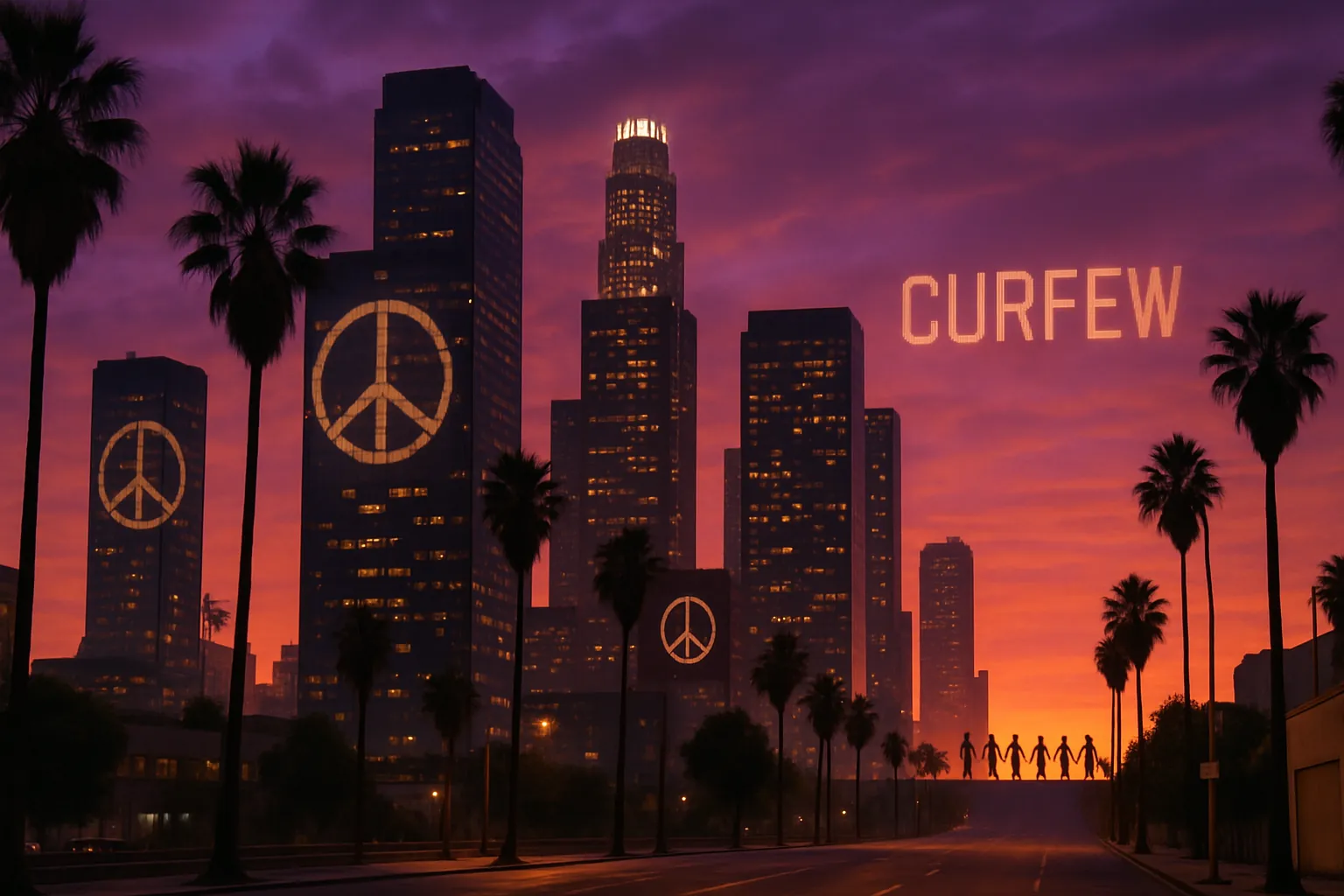
Curfew Imposed in Response to Growing Violence and Looting
As unrest over recent immigration enforcement raids intensified, Los Angeles Mayor Karen Bass has implemented an overnight curfew on a one-square-mile area in downtown Los Angeles. The curfew, effective from 8 p.m. Tuesday to 6 a.m. Wednesday, comes in response to escalating violence, vandalism, and looting witnessed during ongoing protests. Over 23 businesses were looted, and hundreds of protestors arrested in the days prior to the measure. Mayor Bass described the action as a necessary step to separate peaceful protesters from “bad actors who do not support the immigrant community.”
The curfew, covering just a fraction of Los Angeles’ approximately 500 square miles, impacts fewer than 100,000 of the city’s four million residents. It excludes residents, credentialed media, emergency workers, and homeless individuals. Before the curfew began, Mayor Bass joined local faith leaders and immigrant rights advocates in a prayer vigil and peaceful march towards the federal building. This action symbolized solidarity with the immigrant community while emphasizing nonviolent demonstration. Despite this gathering, police reported isolated incidents requiring intervention, including the deployment of rubber bullets against a group of approximately 150 protesters who remained after curfew commencement.
“This curfew is imposed strictly to prevent the violent incidents and property damage we’ve seen over recent days. Peaceful demonstration remains vital and protected,” stated Mayor Karen Bass during a press briefing.
Some protestors faced arrest for serious offenses such as deploying a Molotov cocktail against law enforcement, motorbiking into police formations, theft, destruction of property, and refusal to disperse as ordered by officials.
Deployment of Federal Troops Ignites Political Controversy
The tensions in Los Angeles escalated further due to the federal government’s decision to dispatch approximately 5,000 National Guard troops and Marines to support immigration enforcement efforts. California Governor Gavin Newsom strongly opposed this move, characterizing the deployment as a troubling expansion of military involvement in domestic immigration matters. Governor Newsom publicly criticized the action, labeling it as a “military dragnet” and asserting that it posed serious concerns about democratic governance and civil liberties.
The arrival of active-duty Marines and national guardsmen increased local anxieties, leading to heightened demonstrations across multiple cities, including Seattle, Chicago, Austin, and Washington, D.C. The expansion of National Guard responsibilities from securing federal buildings to actively assisting Immigration and Customs Enforcement (ICE) agents during raids marked a significant escalation prompting widespread criticism from civil rights groups and political leaders.
“Deploying active military personnel in civilian immigration enforcement scenarios elevates tensions unnecessarily and undermines community trust,” Governor Newsom warned at a press conference earlier this week.
Despite California’s attempt to legally block this federal assistance, a San Francisco federal judge rejected the state’s emergency motion. The Justice Department defended the move, arguing it was essential to safeguard homeland security personnel and support lawful federal operations. The Trump administration maintained that intensified measures were necessary, given the high stakes and ongoing unrest.
Historical Context and Broader Implications of Immigration Enforcement
The recent unrest in Los Angeles is not unprecedented. Historically, immigration enforcement has frequently led to protests, particularly in cities with large immigrant populations like Los Angeles. For instance, significant protests occurred in 2006 when proposed federal immigration reforms sparked nationwide demonstrations, with Los Angeles witnessing some of the largest gatherings.
Since then, immigration issues have continually stirred public response, underlining persistent divides regarding immigration policy. Under previous administrations, particularly during heightened deportations under President Obama, protests also intensified, albeit without the same level of federal military involvement.
Los Angeles, home to a large, diverse immigrant community, frequently serves as a flashpoint in immigration debates. The city’s political leaders have traditionally positioned themselves against federal immigration crackdowns, creating tensions with federal authorities that occasionally erupt into public demonstrations.
The broader implications of this latest enforcement surge and subsequent protests extend beyond immediate security concerns. The use of military personnel in civilian contexts raises profound questions about civil-military relations and the militarization of federal law enforcement. Critics argue that deploying active-duty military units in immigration enforcement operations could establish worrying precedents, potentially reshaping the norms of civilian-police interactions and community relations.
Additionally, prolonged or intensified protests could significantly impact local businesses and the economy of downtown Los Angeles, an area already affected by previous periods of unrest and recovering from economic disruptions caused by external events such as the COVID-19 pandemic.
“Cities need to balance safety and civil liberties, especially in immigration contexts,” noted political analyst Dr. Elena Lopez in an interview. “Deploying military forces domestically must always be carefully scrutinized to ensure democratic principles are upheld.”
As city officials monitor the effectiveness and public response to the curfew, Mayor Bass has indicated that similar measures could extend further, depending on how the situation unfolds in coming days. Local authorities will continue evaluating the balance between maintaining public order and guaranteeing the freedom of peaceful assembly amidst a politically charged and highly sensitive issue like immigration enforcement.