

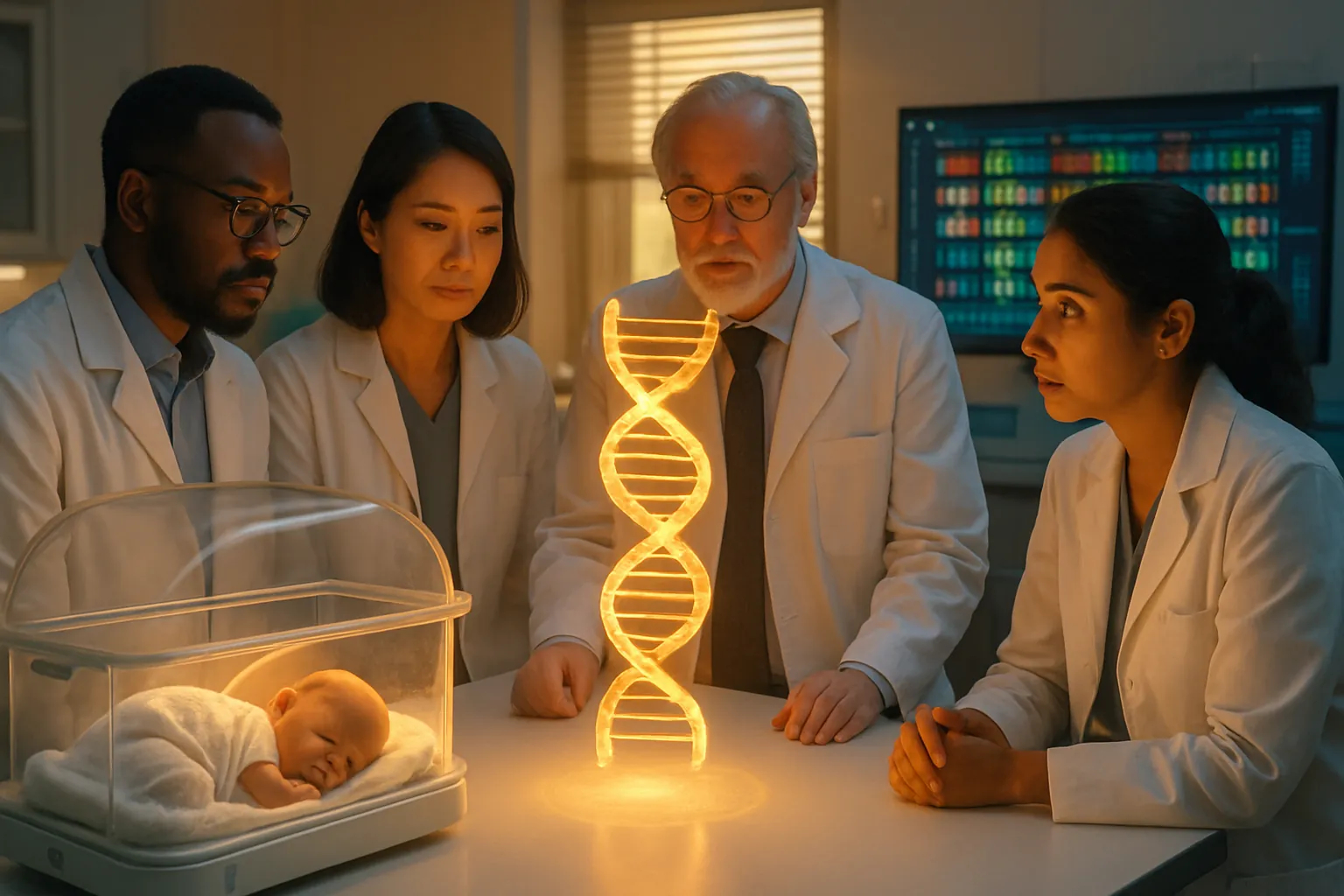
Innovative Gene-Editing Therapy Saves Baby Born with Rare Genetic Disorder
In a medical first, doctors at Children’s Hospital of Philadelphia and Penn Medicine have successfully treated a baby born with severe carbamoyl phosphate synthetase 1 (CPS1) deficiency using a highly customized gene-editing therapy. This condition, an ultra-rare genetic disorder that affects approximately one in 1.3 million newborns, typically leads to fatal ammonia buildup in the blood, resulting in severe neurological damage or death within infancy without a liver transplant. The infant, KJ Muldoon, received a groundbreaking treatment specifically tailored to correct his unique genetic mutation, marking a significant advancement in personalized medicine.
The therapy used to help KJ, now nine months old, is based on CRISPR, a revolutionary gene-editing technology recognized with the Nobel Prize in Chemistry in 2020. Doctors developed the treatment within six months, using a specialized form known as base-editing, which allows for precise modification of specific DNA errors. The customized gene-editing therapy was delivered in three separate infusions between February and April 2025. This approach involved inserting microscopic genetic tools carried by fatty nanoparticles directly into KJ’s liver cells, precisely correcting the gene mutation at its source.
Family members, including parents Kyle and Nicole Muldoon, residing in Clifton Heights, Pennsylvania, have voiced heartfelt gratitude and astonishment at KJ’s recovery and developmental progress. Medical staff initially offered comfort care to the family due to the severity of KJ’s prognosis, but the parents chose instead to pursue this experimental therapy, providing a chance at survival and improved quality of life.
“Seeing KJ reach these developmental milestones is remarkable and fills us with hope,” his family stated, emphasizing their optimism for KJ’s continued recovery while acknowledging the groundbreaking efforts of the medical team.
Chronology of a Medical Milestone: From Diagnosis to Treatment
Kyle and Nicole Muldoon’s infant son KJ was diagnosed shortly after birth with CPS1 deficiency, an aggressive genetic metabolic disorder that severely impairs the liver’s ability to convert ammonia to urea, causing dangerously high ammonia levels in the bloodstream. Standard interventions would have included dietary restrictions, medications, and eventually a liver transplant. Upon diagnosis at Children’s Hospital of Philadelphia, doctors recognized the potential of an experimental base-editing therapy and moved swiftly to design, create, and implement this treatment specifically for KJ’s distinct genetic mutation.
The collaborative effort involved genetic researchers, pediatric specialists, and bioengineers working rapidly to develop this bespoke treatment. It took less than six months from the initial diagnosis to the first successful medication infusion—a remarkably accelerated timeline previously unheard of in genetic medicine. The therapy consisted of three infusions administered over the span of several months, meticulously monitoring KJ’s liver function and general health during the entire procedure.
KJ showed significant signs of improvement shortly after receiving this treatment, including better tolerance to normal feeding and heightened resilience against common infections. However, doctors assert that while the initial outcomes are promising, comprehensive lifelong monitoring will be necessary to fully understand the therapy’s long-term safety and effectiveness.
“We are cautiously excited,” said Dr. Rebecca Ahrens-Nicklas, a leading figure in this groundbreaking treatment. “Proving that personalized gene therapy can be swiftly tailored and effectively delivered opens enormous potential for treating other rare genetic conditions.”
Historical Context and Implications for Future Medical Breakthroughs
Prior to this milestone, genetic disorders such as CPS1 deficiency were often deemed untreatable due to their severity and uniqueness. The lack of suitable treatments frequently left families with limited hope and options, highlighting the critical need for advancements in precision medicine. The introduction of CRISPR-based gene-editing technologies has accelerated the possibilities for personalized treatment, enabling rapid, patient-specific therapy solutions.
The success with KJ’s treatment demonstrates proof-of-concept for the rapid deployment of personalized genetic interventions and sets an important precedent for other rare genetic disorders. Doctors and researchers anticipate that this groundbreaking achievement will encourage further integration of gene-editing technologies into clinical practice, potentially transforming the treatment landscape for rare genetic conditions affecting millions worldwide.
Although this achievement marks significant clinical advancement, there remain substantial barriers to broad implementation, including high costs, logistical complexities, and ethical considerations. The personalized gene-editing treatment administered to KJ cost approximately $800,000, highlighting the economic challenges of expanding this approach widely. However, as technological advancements and efficiencies improve, medical professionals predict costs will gradually reduce, making such personalized therapies more accessible.
Experts believe that with continuing advancements and increased adoption, costs of personalized gene therapies could decrease significantly, much like other transformative technologies have over time. Additionally, streamlined regulatory review processes, development of standardized procedures, and improved delivery methodologies could further expedite these groundbreaking therapies’ broader application.
Overall, KJ’s case represents a pioneering example of how genetic medicine can dramatically change patient outcomes, heralding significant implications for future medical strategies and health policy discussions.
“We believe this is the future of medicine,” Dr. Kiran Musunuru, one of the researchers involved in KJ’s treatment, stated confidently. “Personalized gene-editing could soon become a fundamental part of how we treat rare diseases.”