

Impact of Climate-Driven Wildfires on Public Health
A groundbreaking study published in the journal Nature Communications Earth & Environment has revealed that climate change contributed significantly to wildfire severity, resulting in approximately 15,000 deaths related to wildfire smoke exposure in the United States between 2006 and 2020. The research team, led by scientists from Harvard Medical School and Oregon State University, highlighted the public health crisis caused by the widespread exposure to particulate matter, specifically PM2.5, generated by increasingly severe wildfires.
The study meticulously analyzed wildfire events and associated particulate matter emissions, confirming that smoke exposure has become a significant public health challenge, particularly in states such as Oregon and California. These two states reported the highest fatality rates, with annual death counts ranging from 130 to 5,100. On average, the death rate from wildfire smoke exposure during the study period was 5.14 per 100,000 population per year, a rate twice as high as that from hurricanes and tropical cyclones.
“The mortality linked to PM2.5 exposure underscores the severe health impacts of wildfire smoke,” said Nicholas Nassikas, a physician and professor of medicine at Harvard Medical School and an author of the study. “This clearly demonstrates a growing threat to public health associated directly with climate-driven environmental changes.”
This comprehensive analysis provides a stark picture of the silent danger posed by wildfire smoke. Researchers emphasized that the most vulnerable populations include children, pregnant individuals, the elderly, and outdoor workers, who are at a heightened risk due to prolonged exposure to fine particulate matter. The health effects of PM2.5 range from acute respiratory issues like coughing and itchy eyes to severe long-term cardiovascular and respiratory diseases.
Detailed Insights into Study Methodology and Economic Losses
The methodology used by the researchers marked a significant advancement in isolating climate change’s specific impact on wildfire phenomena. The study compared real-world data of weather conditions and wildfire outbreaks against modeled scenarios that visualized a hypothetical world without human-caused climate influence. This method allowed scientists to directly attribute increased wildfire severity and its resulting health impacts to climate change.
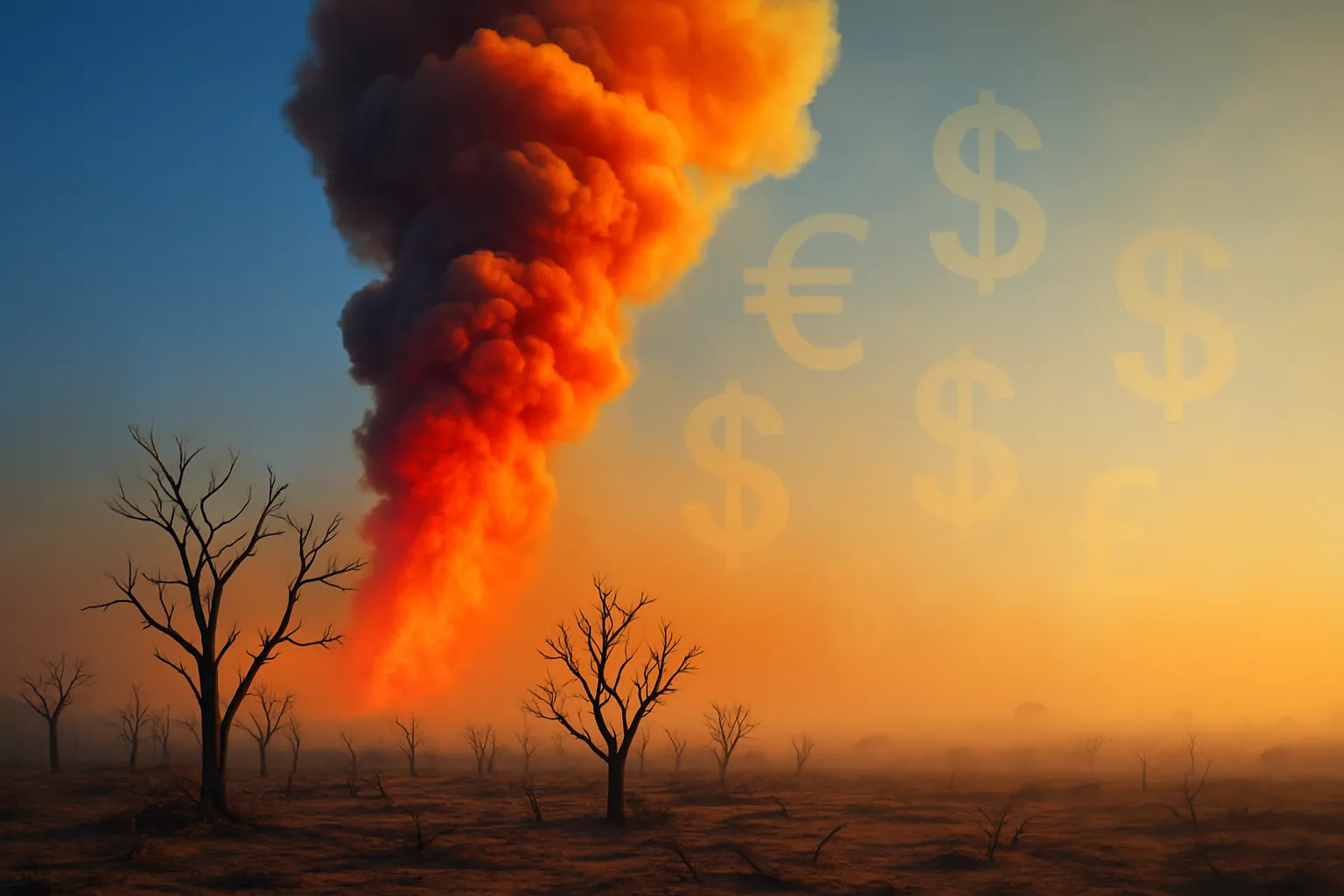
Alongside health consequences, the study quantified substantial economic repercussions, estimating $160 billion in losses due to wildfire-related pollution and public health issues over the same fifteen-year period. Wildfire smoke events have intensified significantly, producing nearly half of the PM2.5 pollution across the nation, thus becoming one of the primary environmental health concerns confronting U.S. policymakers and public health officials.
Bev Law, lead author from Oregon State University, connected wildfire severity with climate-related changes such as earlier snowmelts and intensified heat waves. These conditions not only promote more vigorous wildfire spread but also enhance the duration and frequency of smoke exposure events, magnifying the public health and economic impacts.
Jacob Bendix, professor emeritus of geography and environment at Syracuse University, expressed deep concern stating, “These findings, while dismaying, are unfortunately not surprising. They highlight how essential it is for us to adjust our strategies dealing with wildfire prevention and public health protection.”
Broader Context: Historical Trends and Policy Implications
Historically, wildfires have been a natural component of the U.S. ecological landscape, serving critical functions in regenerating ecosystems. However, the scale and frequency of these fires have visibly escalated over recent decades, largely attributed to climate change driven by human activities. The Intergovernmental Panel on Climate Change (IPCC) and numerous scientific reports affirm that rising global temperatures and changing precipitation patterns contribute significantly to increasing wildfire risks.
Data from the National Interagency Fire Center illustrates this worrying trend, showing a marked increase in both the number and acreage of wildfires in recent years. In 2020 alone, wildfires burned nearly 10.3 million acres in the United States, compared to the annual average of about 4.4 million acres throughout the 1990s.
The economic damages reported in the study, totaling $160 billion over fifteen years, emphasize the need for significant policy changes and increased investment in wildfire prevention and public health protection measures. Experts advocate for stronger mitigation efforts aimed at reducing greenhouse gas emissions, alongside enhanced community preparedness and adaptation strategies.
Policy implications of these findings are far-reaching. State and national governments face mounting pressure to implement comprehensive forest management practices and critical public health initiatives. These include better air quality monitoring, more robust early-warning systems, and targeted support for vulnerable communities. Public health professionals argue for greater emphasis on educational outreach to ensure that citizens understand risks and adopt preventive measures effectively.
The Health Effects Institute notes, “Globally, PM2.5 causes approximately four million deaths annually, highlighting that this challenge extends far beyond U.S. borders and requires international cooperation on effective strategies for air quality improvement and climate resilience.”
This study provides critical evidence that climate-driven wildfires have severe implications for public health and economic stability, necessitating immediate and coordinated action from policymakers, communities, and international bodies.