

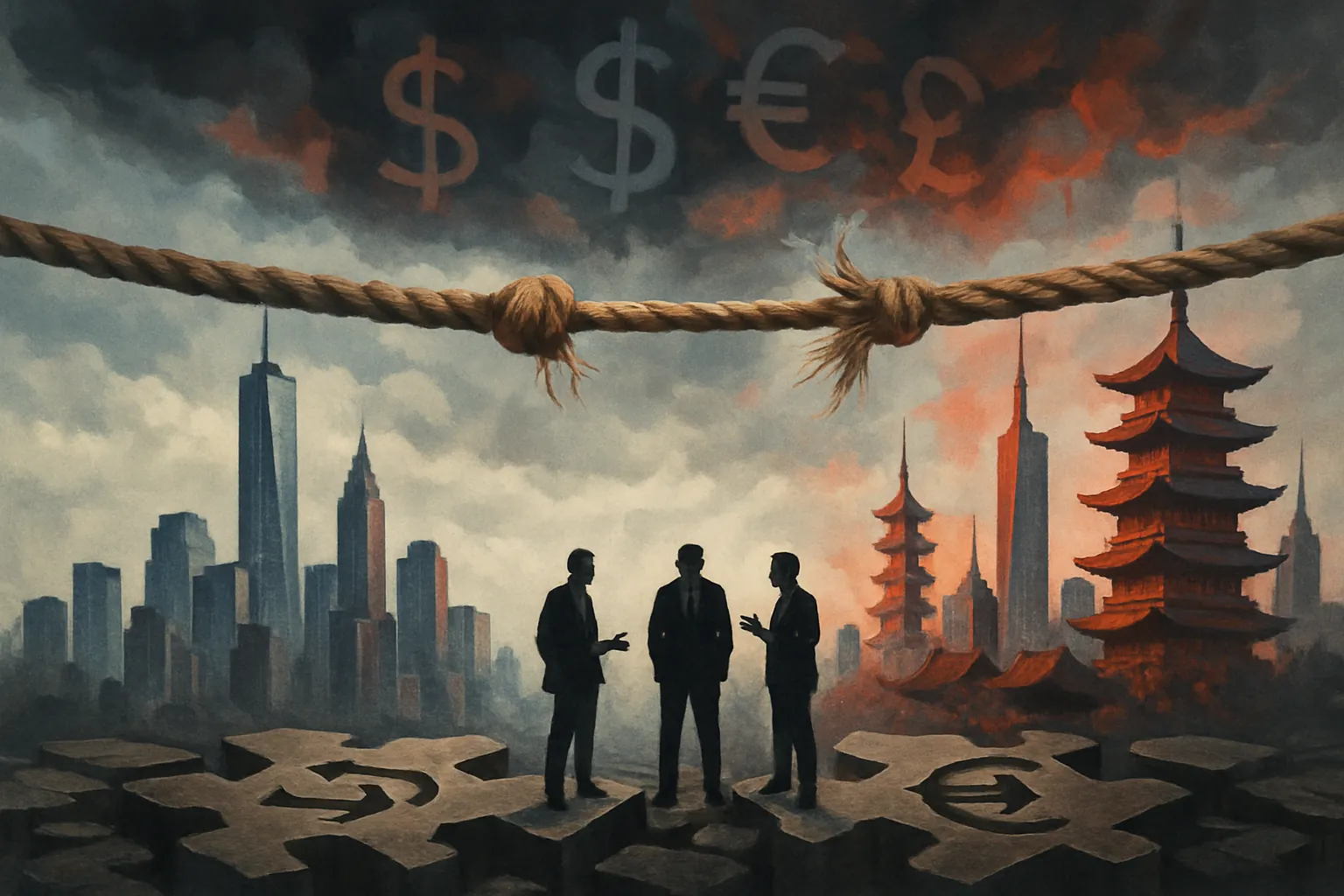
President Trump Alleges Violations as Trade Tensions Intensify
Former President Donald Trump has publicly accused China of breaching a recent trade agreement between the United States and China, exacerbating an already tense international trade situation. The preliminary accord reached on May 12 allowed for a 90-day suspension of new tariffs between the countries and established conditions aimed at reducing trade barriers. However, Trump claims that China has not adhered to key components of the agreement, specifically related to non-tariff barriers and certain trade practices.
The accusation from Trump highlights a broader assertion from U.S. Trade Representative Jamieson Greer, who stated that China had failed to remove agreed-upon non-tariff barriers. Greer indicated that these barriers negatively impacted U.S. exporters, particularly in sectors involving technology and agriculture.
This sharp criticism occurred just hours after a court ruling allowed the continuation of previously imposed tariffs, termed “liberation day tariffs,” pending appeal. Such tariffs have had significant impacts on trade flows between the U.S., Canada, Mexico, and China, creating uncertainty and market volatility.
In response, Chinese authorities strongly disputed Trump’s claims and criticized recent U.S. policy decisions. China specifically condemned the intensified U.S. export controls targeting semiconductor technology.
“These discriminatory restrictions imposed by the United States on semiconductor exports undermine the principles of fair competition and violate the consensus reached in Geneva,” a Chinese foreign ministry spokesperson stated.
The growing frictions led President Trump to announce a doubling of tariffs on steel and aluminum imports, raising them to 50% from previous levels. Although China exports minimal quantities of steel to the U.S. due to earlier tariffs, Trump’s administration emphasized the measure as vital for protecting domestic industries from unfair global competition.
Negotiations at a Standstill, Direct Intervention Suggested
Amid this heightened tension, current U.S. Treasury Secretary Scott Bessent clarified that negotiations between the U.S. and China have reached a significant impasse. Speaking publicly, Bessent described the current situation as “a bit stalled,” attributing the standstill to unresolved core issues within the negotiations.
To move beyond this stalemate, Bessent suggested that a direct discussion between Trump and Chinese President Xi Jinping may be necessary. This recommendation underscores the complexity of trade negotiations that persist despite multiple rounds of lower-level talks.
The stalled negotiations add a layer of uncertainty for global markets, with immediate impacts evident in stock indices and international trade forecasts. As news of the stalled negotiations emerged, U.S. stock futures experienced declines, reflecting investor concerns about potential escalation and prolonged economic disruption.
“The current impasse requires decisive leadership at the highest governmental levels. Direct engagement between Presidents Trump and Xi Jinping could provide the breakthrough needed,” Secretary Bessent emphasized during his statement.
Compounding the matter, reports indicate that the U.S. administration has ordered American companies to halt shipments of specific high-end goods to China, including chip design software and specialty chemicals. Industry experts warn that these escalatory actions could exacerbate existing tensions further, negatively impacting bilateral trade relations and global economic stability.
Following the May 12 tariff suspension agreement, both sides maintained a baseline 10% tariff on mutual imports, creating an environment of cautious optimism, which has now turned into renewed uncertainty. The global community closely observes these developments, as an extended trade dispute could significantly influence international economic norms.
Historical Context and Broader Implications
The dispute between the United States and China represents the latest chapter in a prolonged series of trade disagreements that intensified notably during Trump’s presidency. His administration previously imposed sweeping tariffs targeting Chinese imports, citing unfair trade practices and intellectual property violations. China responded in kind, raising tariffs on U.S. goods, and setting off reciprocal economic pressures that impacted industries ranging from agriculture to consumer electronics.
According to economic analysts, the trade conflict has contributed to a restructuring of global supply chains, where industries dependent on Chinese manufacturing have sought alternative sources to mitigate risk. This restructuring has, in some cases, incurred higher operational expenses that translate into increased prices for consumers globally.
This latest allegation of trade agreement violations by Trump further illustrates the delicate and often cyclical nature of international trade diplomacy. Historically, agreements have frequently been followed by periods of contention and reconsideration, especially between the world’s two largest economies.
The semiconductor sector remains a particularly contentious area within this dispute. Semiconductors serve as critical components in a range of advanced technologies from telecommunications to defense systems, emphasizing their strategic significance. The U.S. has significantly tightened exports of semiconductor technology, citing national security concerns. These actions date back to Trump’s original tenure in office, reflecting consistent policy stances across multiple U.S. administrations.
With economic analysts projecting prolonged tensions, investors remain wary of sustained volatility. Observers note that this situation demonstrates the interconnectedness of modern global economies, where bilateral tensions can rapidly affect international markets.
“The ongoing U.S.-China trade dispute serves as a reminder of the profound impact bilateral relations have on global economic stability,” noted a prominent international trade analyst. “Resolution or escalation of this conflict will significantly influence global economic forecasts in the coming months.”
The outcome of potential direct dialogues between Trump and Xi may provide clarity or possibly exacerbate tensions, depending heavily on diplomatic conduct and mutual concessions. As the global economic community watches closely, the trajectory of U.S.-China relations remains a focal point for predicting future economic volatility.