

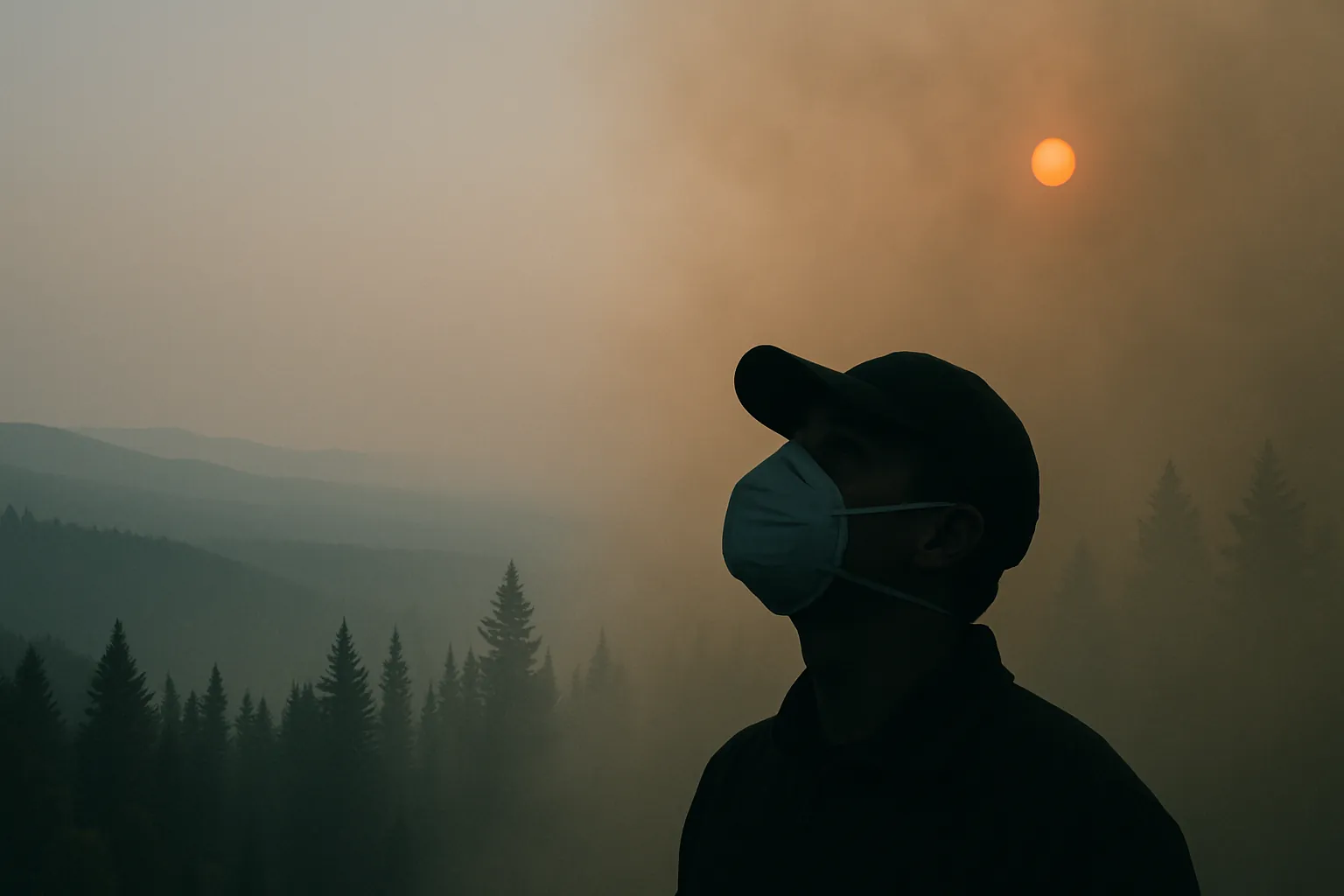
Wildfire Smoke from Canada Drifts into U.S. Midwest
Heavy smoke from Canadian wildfires is significantly impacting air quality across several northern U.S. states, prompting widespread health advisories. Affected areas include Minnesota, Wisconsin, Michigan, Illinois, and even extending further east towards western Pennsylvania. Particularly intense conditions were reported in Minnesota, where cities such as Duluth, Brainerd, Ely, and Grand Marais faced unhealthy air conditions, leading to statewide air quality alerts issued by the Minnesota Pollution Control Agency (MPCA).
The current air quality alert in Minnesota is effective through Monday evening. Authorities warn that smoke could elevate fine particle pollution to unhealthy levels, especially dangerous for vulnerable groups including children, the elderly, and those with respiratory or cardiovascular conditions. Meteorological conditions, including a passing cold front, have been linked to the worsening scenario, dragging dense smoke further south into populated regions.
“It’s important that residents, particularly those in sensitive health groups, limit their outdoor exposure during this period,” the MPCA cautioned in their advisory. “Smoke from wildfires contains tiny pollutants that can deeply penetrate the lungs, causing serious health problems.”
Furthermore, meteorologists noted that the cooling and warming patterns, causing air to rise and fall, could intermittently bring higher-altitude smoke nearer to the ground, severely impacting local air quality.
Chronology of the Ongoing Wildfire Situation
The wildfire season in Canada typically spans March to October, peaking in intensity as weather conditions dry in the summer months. However, this year’s wildfire season began earlier than usual, marked by severe fires erupting from as early as May. Recent reports from the Canadian Interagency Forest Fire Center indicate over 160 active wildfires, many of which remain uncontrolled, primarily across Saskatchewan, Manitoba, Alberta, and British Columbia.
This alarming situation began with a significant wildfire incident in Manitoba this May, resulting in two fatalities and leading to mass evacuations. In total, Canadian authorities report more than 17,000 residents displaced due to the ongoing fires. This crisis has resulted in air quality levels degrading severely across multiple Canadian provinces, with six provinces and territories so far experiencing direct impacts from wildfire smoke.
“We’ve seen significant increases in wildfire activity due to prolonged droughts and evolving climate conditions,” explained Mark Moss, an allergist who has studied patterns of air quality deterioration due to wildfires. “It’s now becoming unfortunately habitual that we see these broad smoke incursions each summer, affecting large populations.”
The smoke has since traveled extensively, reaching far into the United States, carried by weather systems and prevailing winds. Recent smoke patterns prompted air quality alerts extending from Northern Michigan through to metro Detroit, with forecasts indicating smoke disruptions potentially continuing intermittently into the following week.
Health, Environmental Impact, and Policy Implications
The persistent presence of wildfire smoke poses significant health risks. Fine particulate matter emitted from wildfires can exacerbate respiratory issues like asthma and bronchitis, increase cardiovascular strain, and impact general physical health. Health officials continuously remind residents in affected regions to stay informed through official air quality indexes and limit exposure by reducing outdoor activities, employing indoor air filtration systems, and properly sealing homes and buildings.
Besides immediate health concerns, prolonged exposure to wildfire smoke and repeated episodes of poor air quality can have broader implications on community health infrastructures. Increased hospital admissions, medication demands, and healthcare resources are expected, potentially burdening local healthcare systems—especially critical now due to existing health challenges.
“Repeated wildfire smoke exposure could potentially lead to chronic respiratory health complications,” noted Dr. Moss. “Communities should not underestimate the long-term impacts associated with recurrent smoke episodes.”
Officials across regions are inclined to develop more robust emergency response plans and preventive community measures. For instance, the city of Reno is updating its Community Wildfire Protection Plan, highlighting a nationwide shift towards enhanced preparedness due to wildfire frequency increases. Similar proactive planning is becoming essential for many cities and communities regularly subjected to wildfire impacts.
Ongoing occurrences of severe wildfire smoke have also begun prompting policy dialogue and potential shifts in environmental management and emergency preparedness strategies. Policies concerning conservation, wildfire management, and climate change mitigation are becoming central to both local and national governmental agendas, as communities grapple with sustained environmental challenges posed by wildfires.