

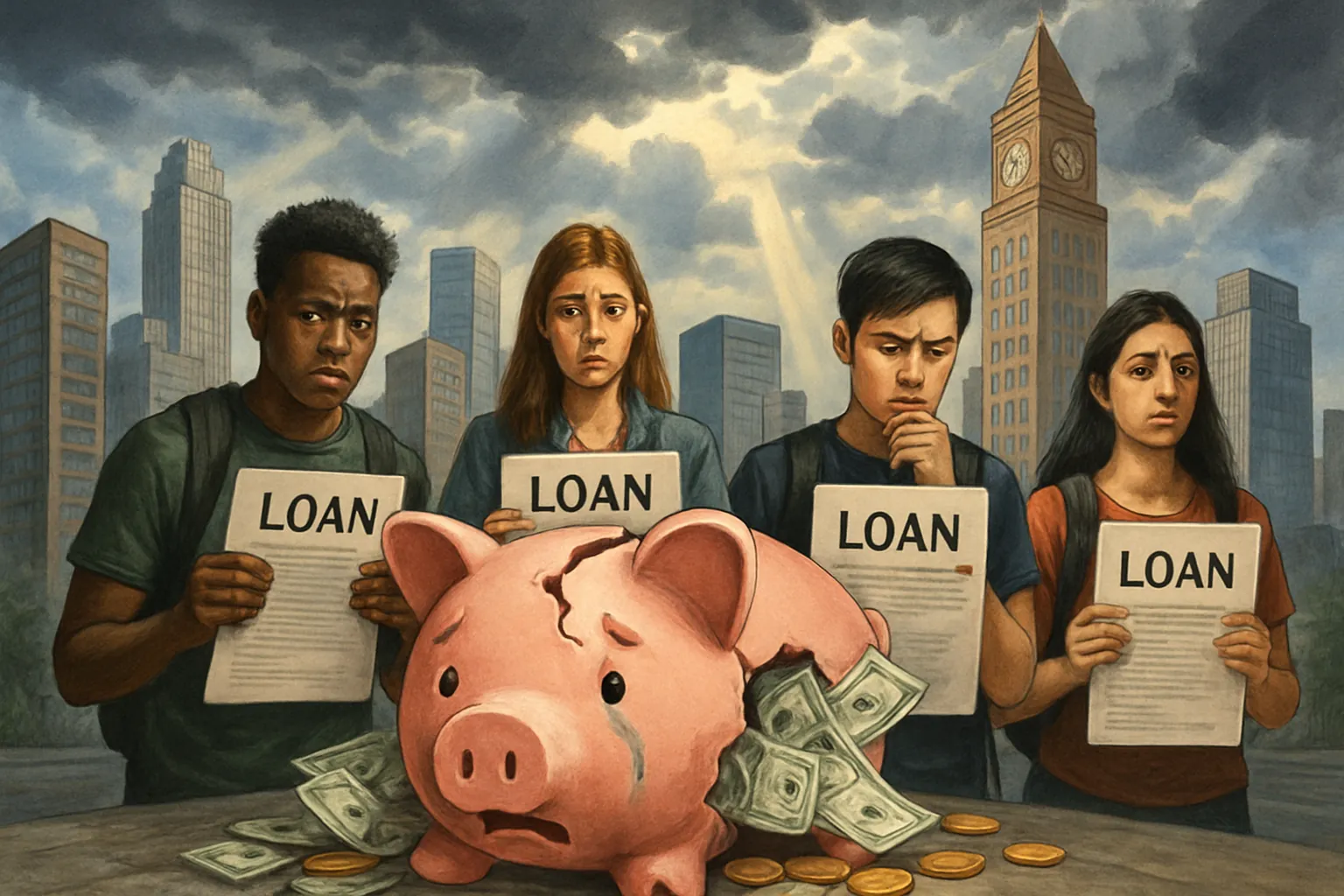
Surging Student Loan Delinquency Rates Amid Payment Restart
After nearly five years of paused repayments and federal reporting due to the COVID-19 pandemic, student loan borrowers in the U.S. are now facing significant financial stress. According to a recent report from the Federal Reserve Bank of New York, student loan delinquency rates surged dramatically in the first quarter of 2025. The report reveals that nearly 8% of outstanding student loans were at least 90 days overdue, a marked increase from less than 1% recorded in the last quarter of 2024. Among borrowers obligated to resume payments, nearly one in four, or 23.7%, fell behind on their student loan payments, reflecting the sudden financial burden faced by millions.
This increase in delinquencies has been attributed primarily to the end of the government-mandated payment moratorium, implemented to ease financial pressure during the pandemic. With repayment obligations resuming abruptly, many borrowers were ill-prepared, leading to widespread financial difficulties.
“The spike in student loan delinquency was anticipated to some extent, given the prolonged pause,” noted researchers from the New York Fed. “However, the magnitude of the rise underscores the challenges borrowers are encountering as repayment responsibilities return.”
The sharp escalation in overdue student loans significantly influenced the overall consumer debt profile, pushing the national aggregate delinquency rate for various consumer debt to 4.2% in Q1 2025, up from 3.6% previously. Notably, other forms of consumer credit, including credit cards and auto loans, saw relatively stable or decreasing balances during this period, highlighting the unique stress confronting student loan borrowers.
Geographic and Socioeconomic Disparities in Loan Delinquency
The student loan crisis illustrated stark regional disparities across the United States. The highest delinquency rates were concentrated in the Southern states, with seven states surpassing a concerning 30% rate of delinquency. Mississippi experienced the highest rate at 44.6%, followed closely by other states in the region. These high delinquency figures suggest widespread economic vulnerabilities and highlight regions that may need targeted financial intervention and support.
The impact was also noticeably severe among older borrowers. Many of these borrowers face significant challenges, as they are often repaying education debts alongside mortgages and medical bills, illustrating a broader financial security issue many Americans confront as they age.
Credit score impacts further delineate the depth of the student loan repayment crisis. Approximately 2.2 million borrowers experienced credit score decreases of over 100 points, and notably, 1 million of these borrowers saw their scores plummet by at least 150 points. Such substantial drops in credit ratings severely restrict access to essential forms of credit, including mortgages and car loans, and lead to increased borrowing costs, thus compounding financial strain.
“The decline in credit scores for millions of borrowers has potential long-term implications,” financial analyst Mark Bodnar commented. “It affects their ability to secure affordable credit in the future, potentially creating a cycle of financial hardship.”
Broader Implications and Policy Relevance
Historically, student loans have been an integral and contentious part of the American financial landscape, with policy debates frequently centering around the affordability and accessibility of higher education. Before the COVID-19 pandemic, nearly 45 million Americans carried substantial student loan debt, totaling approximately $1.6 trillion, underscoring its considerable economic impact.
The unprecedented pause on repayments during the pandemic provided temporary relief, but its expiration has reignited concerns over sustainability and fairness in education financing policies. The resumption of collections, including wage garnishment and withholding of federal benefits, marks an aggressive shift back toward enforcement, and critics argue that it further exacerbates the financial fragility of already vulnerable borrowers.
The dramatic rise in delinquencies following the end of pandemic-era protections has sparked renewed discussion among policymakers and advocates about long-term solutions, including broader debt forgiveness initiatives, structural changes in loan repayment schemes, and increased consumer protections.
Moreover, the data from this recent surge in delinquencies could influence broader economic policy. With total U.S. household debt now reaching $18.2 trillion, the student loan sector’s volatility stands out uniquely, suggesting that targeted policy interventions could be pivotal in stabilizing the consumer credit market.
“Addressing this surge in student loan delinquencies will likely require coordinated policy action,” explained Janet Dunlap, a former financial regulator. “It’s not merely about alleviating immediate financial distress but also about creating resilient frameworks for future economic stability.”
This report from the New York Fed is expected to influence future policy deliberations significantly, prompting potential legislative and regulatory action aimed at enhancing financial literacy, restructuring repayment options, and possibly exploring further avenues for debt relief.
As U.S. consumers adjust to the renewed demands of student loan repayments, the path forward remains complex and fraught with challenges, demanding careful attention from policymakers, financial institutions, and individuals alike.