

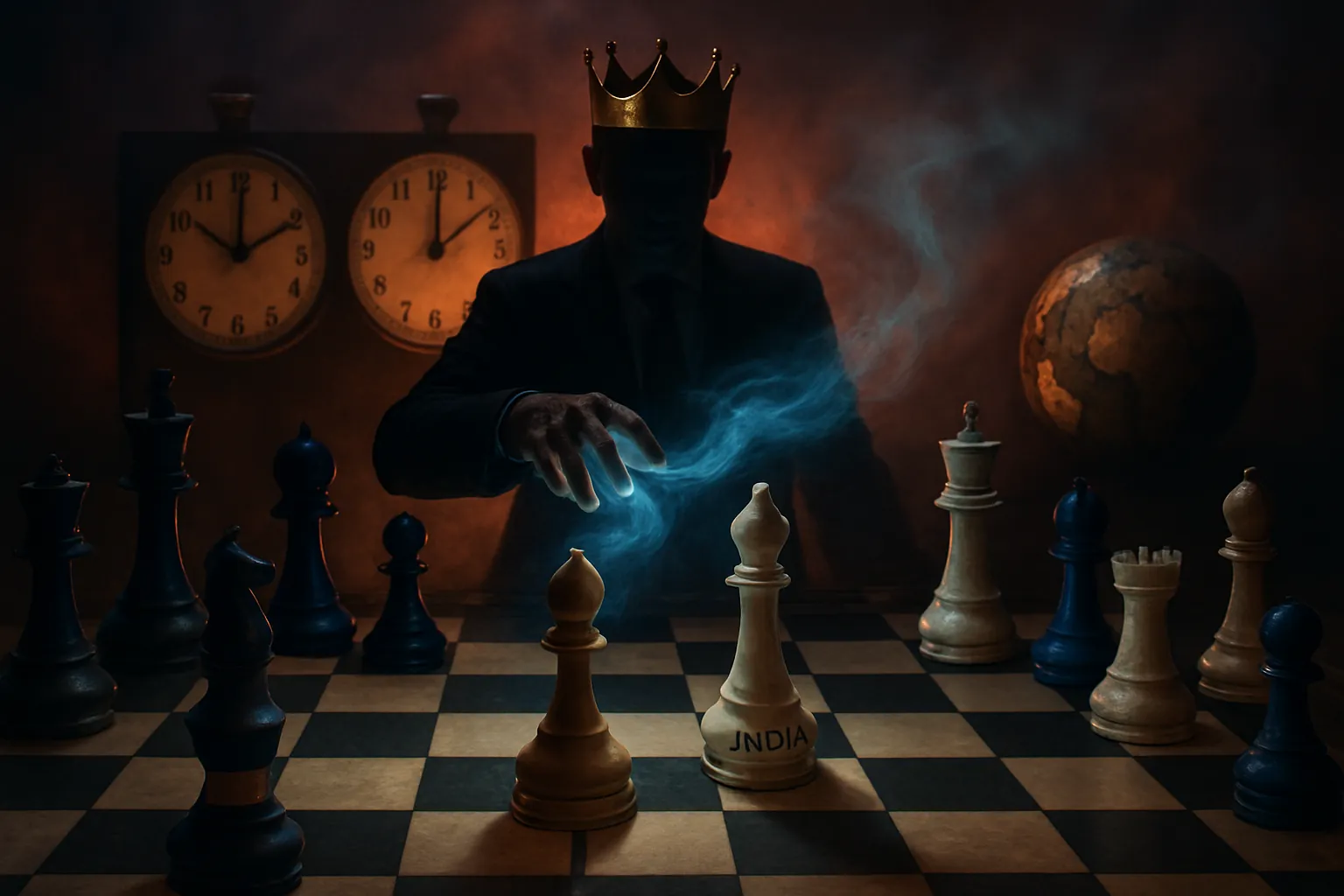
Trump’s Claims of Diplomatic Intervention
President Donald Trump recently stated during a White House briefing that his administration played a pivotal role in preventing a potential nuclear conflict between India and Pakistan. According to Trump, American diplomatic efforts, notably including interventions from Vice President JD Vance and Secretary of State Marco Rubio, facilitated an immediate ceasefire agreement between the two nuclear-armed nations following heightened clashes. Trump specifically credited the use of economic incentives, claiming he utilized the promise of future trade deals as leverage to persuade both countries to cease hostilities.
Trump declared that without U.S. intervention, millions could have potentially died in what he described as a “bad nuclear war.” He emphasized the gravity of the situation and commended Indian and Pakistani leadership for their wisdom in understanding the severity of ongoing tensions.
“People have never really used trade the way I used it,” Trump remarked, “I said, ‘Come on, we’re going to do a lot of trade with you guys. Let’s stop it. Let’s stop it. If you stop it, we’re doing trade. If you don’t stop it, we’re not going to do any trade.'”
Trump also referenced ongoing negotiations, affirming that the United States would increase trade relations and bolster bilateral economic ties with both India and Pakistan, further suggesting American diplomatic involvement could extend to future peace-building efforts in the volatile region.
India Rejects Trump’s Trade Assertion
Following Trump’s bold statement on U.S.-mediated diplomacy and economic bargaining, Indian government sources promptly refuted these claims, asserting that no third-party mediation took place. The ceasefire, they maintained, was a direct result of bilateral discussions between the Directors General of Military Operations (DGMOs) from India and Pakistan, who engaged in a 45-minute hotline conversation to agree upon a commitment to cease firing and explore immediate troop reductions along their shared border.
Indian officials, speaking anonymously, categorically denied any discussion of trade incentives or pressures during diplomatic exchanges with U.S. representatives. This stance was echoed by official sources who noted that “no aspect of trade was mentioned or considered as conditions for ceasefire or de-escalation.”
“Trade was never referenced in any diplomatic dialogue held between India and the United States,” emphasized one senior Indian source. “Our conversations centered solely around maintaining regional security and ensuring stability through direct communications with Pakistan.”
The opposition Congress party, seizing upon Trump’s public comments, has demanded official clarification from Prime Minister Narendra Modi. They have called for convening a special parliamentary session specifically to discuss key issues surrounding the recent conflict, including the attack in Pahalgam and the specifics of Operation Sindoor, further underscoring the domestic political sensitivity of this international incident.
Historical Context and Regional Implications
The latest escalation between India and Pakistan, labeled Operation Bunyan-um-Marsoos by Pakistan, began in late April after heightened tensions in the disputed Kashmir region. Clashes intensified significantly, leading to international fears over possible nuclear deployment, given the fraught historical relationship between the two countries. India, which maintains a strict policy against third-party mediation over its conflicts with Pakistan, has historically insisted on bilateral negotiations to address issues of cross-border terrorism and territorial disputes, notably around Kashmir, a region claimed in entirety by both nations.
This policy dates back to the signing of the 1972 Simla Agreement, which emphasized bilateral resolution of disputes without third-party intervention. Over the decades, despite intermittent conflicts and frequent violations of ceasefire agreements, India has consistently resisted external diplomatic intervention, particularly from powerful states such as the U.S.
Regional experts warn of continuing volatility despite recent agreements. The history between the two countries includes recurring confrontations following partition in 1947, wars in 1965, 1971, and the Kargil conflict in 1999, each conflict escalating dangerously close to full-scale war. This historical backdrop reinforces the significance and sensitivity surrounding any claimed foreign intervention.
“The U.S. intervention, even if overstated by Trump, once again underscores the global terror at the thought of nuclear conflict between India and Pakistan,” noted Dr. Amitabh Mattoo, an expert on international relations. “However, India’s stern response reflects its traditional policy stance, refusing to allow others, however powerful, to shape its strategic relations with Islamabad.”
With heightened international awareness and attention focused on the region, it becomes increasingly crucial for both India and Pakistan to reinforce direct dialogue mechanisms to manage explosive escalations independently. The potential implications of external mediation claims, such as those recently asserted by President Trump, could significantly impact diplomatic trust and strategic engagement in South Asia, reinforcing the importance of verifiable and transparent communication in future diplomatic scenarios.