

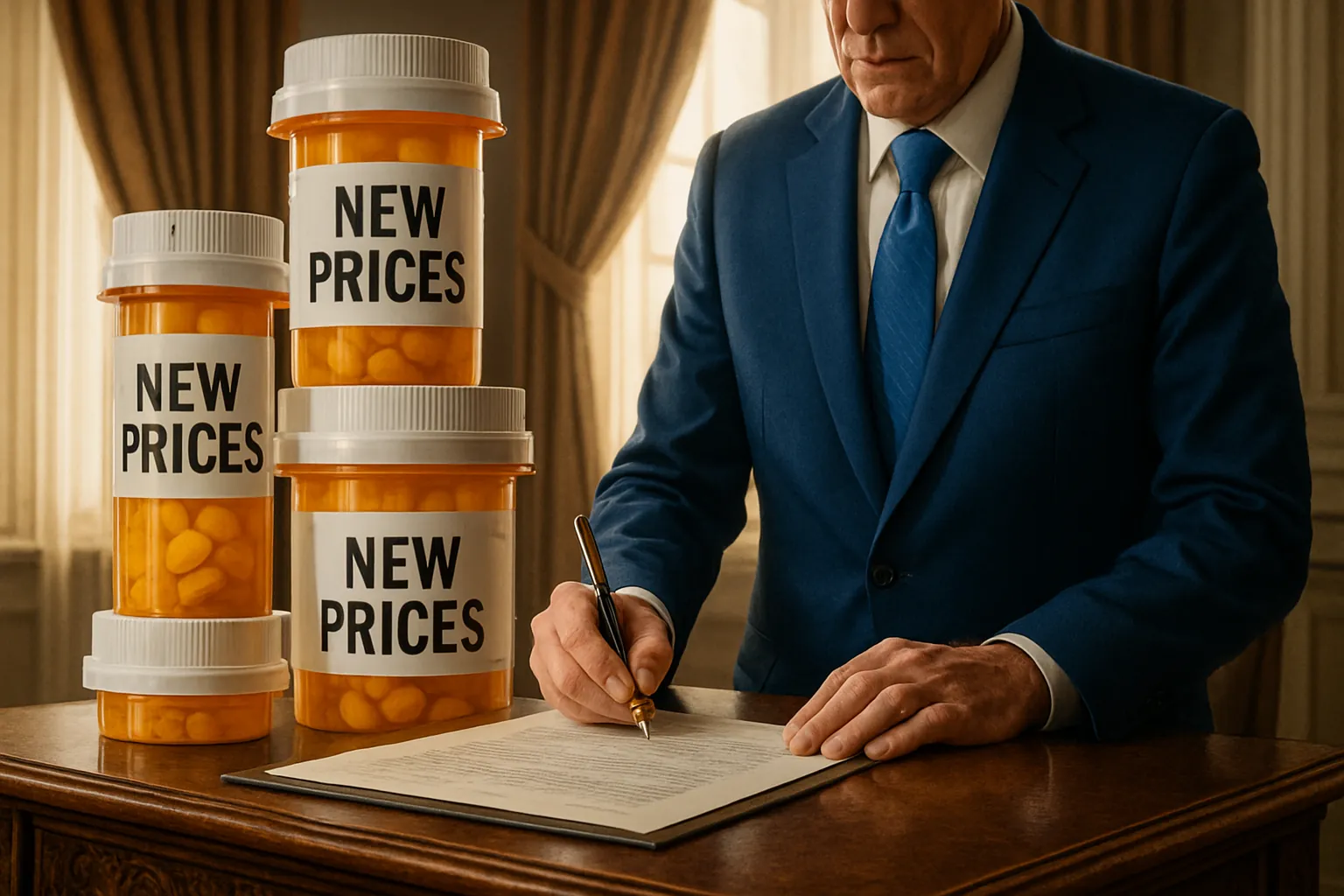
Trump Introduces Sweeping Drug Pricing Reform
President Donald Trump has officially signed an executive order introducing a comprehensive reform aimed at reducing prescription drug prices significantly for millions of Americans. The policy, described as a “Most Favored Nation” approach, intends to align American drug prices with the lowest rates paid globally. Under this new plan, prescription drug prices are expected to drop by 30% to 80%, promising immediate relief to many who rely on medications.
Trump’s announcement was made via Truth Social, where he described the executive order as one of the most impactful decisions of his career. He emphasized that healthcare costs would reduce “almost immediately” upon the plan’s implementation, reflecting his administration’s ongoing commitment towards affordability in healthcare.
“We will ensure fairness and equalize drug prices so Americans no longer pay higher prices than citizens in other advanced nations,” Trump stated.
The decision was met with both praise and criticism. While many consumers and healthcare advocacy groups applauded the immediate benefits, pharmaceutical companies expressed significant concern. The Pharmaceutical Research and Manufacturers of America (PhRMA) warned that imposing government price controls could adversely impact medical research, potentially stifling innovation and patient access to new therapies.
Details and Immediate Reactions to the Order
Under this Most Favored Nation (MFN) pricing model, drug prices in the U.S., particularly those under Medicare, will be closely tied to the lowest prices available internationally. This policy marks a departure from traditional pharmaceutical pricing practices that generally allowed companies to set higher prices in the U.S. market.
Alex Schriver, spokesperson for PhRMA, cautioned against the executive order, suggesting it could lead to unintended consequences, including potential shortages or reduced access to new medicines.
“Government price setting can have direct negative consequences for American patients, including less access to innovative treatments,” Schriver said.
Stocks in pharmaceutical companies, such as Pfizer and Johnson & Johnson, immediately felt the impact of the announcement. Pfizer shares saw a decline of approximately 3.2%, while Johnson & Johnson experienced a 2.8% drop. Broader effects were also seen in healthcare investments, with the healthcare sector ETF XLV falling by 1.9% in pre-market trading following Trump’s declaration.
In tandem, cryptocurrency markets became notably volatile. Analysts noted a correlation increase between traditional market volatility and crypto trading activity during such significant policy announcements. Investors appear to be reassessing their portfolios, potentially pulling away from traditional assets towards alternative investments in digital assets like Bitcoin and Ethereum. Stablecoin activities surged, confirming increased market uncertainty and volatility.
Historical Context and Broader Implications
President Trump’s policy is not entirely new; it builds upon efforts initiated during his first term. Previously attempted by Trump’s administration, the Most Favored Nation strategy faced considerable legal challenges and industry pushback, failing to secure implementation. With this renewed executive order, the administration signals its determination to tackle high pharmaceutical costs, particularly given that the United States pays significantly higher medication prices compared to other advanced economies.
Historically, prescription drug pricing has been a complicated issue in U.S. politics, involving battles between pharmaceutical companies, the government, and consumers. The Inflation Reduction Act under President Biden made some initial steps by allowing Medicare to negotiate certain drug prices, but Trump’s order expands beyond these existing measures, applying potentially to a broader range of pharmaceuticals.
“By aligning U.S. drug prices with the lowest global prices, we aim to bring long-overdue fairness and savings to Americans,” explained a White House official familiar with the executive order.
Critics continue to underscore the potential international repercussions of this policy. Experts indicate that forcing pharmaceutical companies to charge the lowest global prices could disrupt the international pharmaceutical market, potentially causing prices in other countries to rise in response. Trump’s own statements seem to acknowledge this possibility, suggesting the cost reductions in America could indeed be counterbalanced by higher drug costs abroad.
With this executive order now in place, policymakers, pharmaceutical companies, and consumer groups are closely monitoring the rollout. The implementation details, regulatory responses, and potential legal challenges remain to be fully seen, but the initiative undeniably represents a bold step in America’s ongoing healthcare affordability debate.