

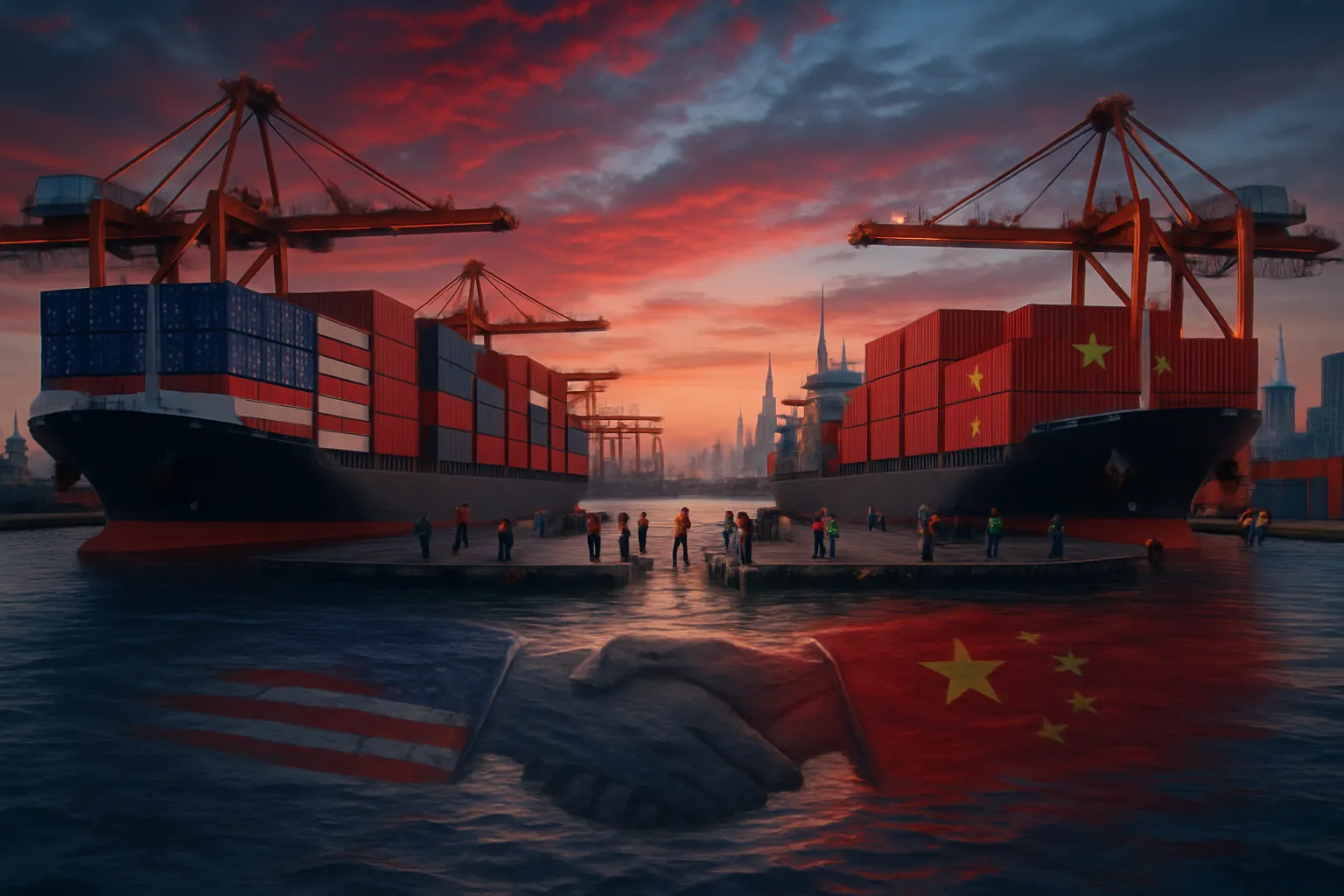
High-Stakes Meeting Amid Escalating Tensions
Top officials from the United States and China are preparing to conduct significant trade discussions in Switzerland, marking their first major diplomatic meeting since tariffs sharply escalated between the two economic powers. This meeting follows a month-long trade war characterized by contentious rhetoric and mutual tariff increases, profoundly affecting international economic stability and supply chains.
In recent developments, there has been disagreement over which nation originally initiated these renewed discussions. Craig Singleton from the Foundation for Defense of Democracies highlighted that the ongoing verbal dispute between the two nations serves broader strategic interests beyond economic negotiations alone.
“The back-and-forth we are witnessing between China and the U.S. is essentially a proxy for broader geopolitical positioning and an attempt to shape international perceptions of dominance,” Singleton explained in a recent analysis.
President Trump recently indicated via social media that a potential reduction of tariffs on Chinese goods to 80% could occur, sparking widespread speculation and prompting a public clarification by the White House. Press Secretary Karoline Leavitt emphasized the administration’s careful consideration of tariffs, reinforcing that definitive positions will be negotiated directly in the talks.
These exchanges underscore the strategic element of public diplomacy at play as both sides approach the negotiating table. Economists and trade analysts caution, however, against overly optimistic expectations, noting that substantial concessions from either side remain unlikely at this phase of negotiations.
Complex Negotiation Dynamics and Expected Outcomes
Trade experts and government officials have outlined that this diplomatic engagement will be critical in clarifying the ultimate intentions regarding tariffs between the two largest global economies. Despite the contentious exchanges thus far, both parties acknowledge the necessity of finding common ground to mitigate economic harm.
Former diplomat Daniel Russel emphasized that Chinese negotiating tactics traditionally steer clear of any indication that China is explicitly seeking concessions. Russel noted that this cultural and diplomatic stance considerably complicates the American approach to these negotiations.
“China traditionally tries to avoid the appearance of seeking concessions, preferring a narrative of mutual benefit or self-driven policy adjustments,” Russel elaborated. “This makes the task of U.S. negotiators significantly more nuanced and challenging.”
The current state of trade relations between the United States and China has significant implications for global markets. Tariffs implemented by both countries have raised costs substantially for several industries, including agriculture, technology, and manufacturing, creating considerable uncertainty within global supply chains. Businesses on both sides have repeatedly voiced concerns about the negative economic impact resulting from prolonged trade tensions.
Economists suggest that while these preliminary discussions are critical to opening channels for dialogue, major outcomes or notable policy reversals are improbable in initial meetings. Rather, this summit aims to establish groundwork for ongoing dialogues, clarifying negotiation priorities, and setting a framework for future interactions.
Historical Context and Broader Implications for Global Trade
Trade disputes between the U.S. and China have a storied and complicated history, often reflecting broader geopolitical undercurrents. The recent intensification of tensions continues a pattern observed during Trump’s first presidency, where tariff implementation became a standard yet controversial tool for political leverage.
The current trade war, initiated only a month ago, has rapidly accelerated tariffs, escalating to significant economic repercussions worldwide. Historically, tariff barriers have frequently been tools of economic statecraft, wielded to influence political outcomes domestically and abroad. The Trump administration, in particular, has utilized tariffs not only against China but also against other trading partners as part of a broader economic nationalist policy.
The immediate and broader implications of the U.S.-China trade negotiations hold substantial importance for global economic stability and future policy. Analysts underscore that unresolved disputes could trigger further escalation, potentially provoking broader global economic downturns. Conversely, any agreements or easing of tensions could significantly stabilize markets, bolster economic growth, and restore investor confidence.
Economists from various research institutes indicate that, regardless of immediate outcomes, the discussion will likely influence ongoing policy directions in both countries significantly. These discussions further serve as an essential indicator of how both nations might approach future trade policy, diplomatically navigating economic conflict while balancing internal economic pressures and international expectations.
The Geneva talks thus represent far more than a bilateral trade discussion; they are a critical juncture capable of reshaping global economic dynamics. The outcomes may influence international norms regarding economic cooperation and conflict resolution, highlighting the intersection of economic policy and geopolitical strategy that defines current U.S.-China relations.